

Making your first motorcycle purchase is a rite of passage, but it is easy to get overwhelmed by horsepower specs and conflicting advice. One friend tells you to start on a 600cc sportbike because you will outgrow anything smaller. Another insists you need a cruiser. The internet shouts a dozen different opinions at once. This guide cuts through the noise. It covers the bike, the budget, and the hidden costs that most first-time buyer articles ignore: gear, insurance, and licensing. If you are an absolute beginner in the United States, this is the framework you need to make a smart, safe, and financially sound decision.
Your first motorcycle purchase is not just a transaction; it represents a new chapter in your life. Along with the excitement, it brings responsibilities that require thorough consideration.
Why Your First Motorcycle Purchase Is Different From Buying a Car
A car is transportation. A first motorcycle is a skill-building tool. That distinction changes everything. When you buy a car, you prioritize comfort, cargo space, and fuel economy. When you make your first motorcycle purchase, you need a machine that forgives your mistakes. A bike with too much power or weight will stall your progress. Worse, it can put you in a situation you do not have the muscle memory to handle.
As you navigate your first motorcycle purchase, keep in mind that it is essential to choose a bike that suits your learning style and riding goals.
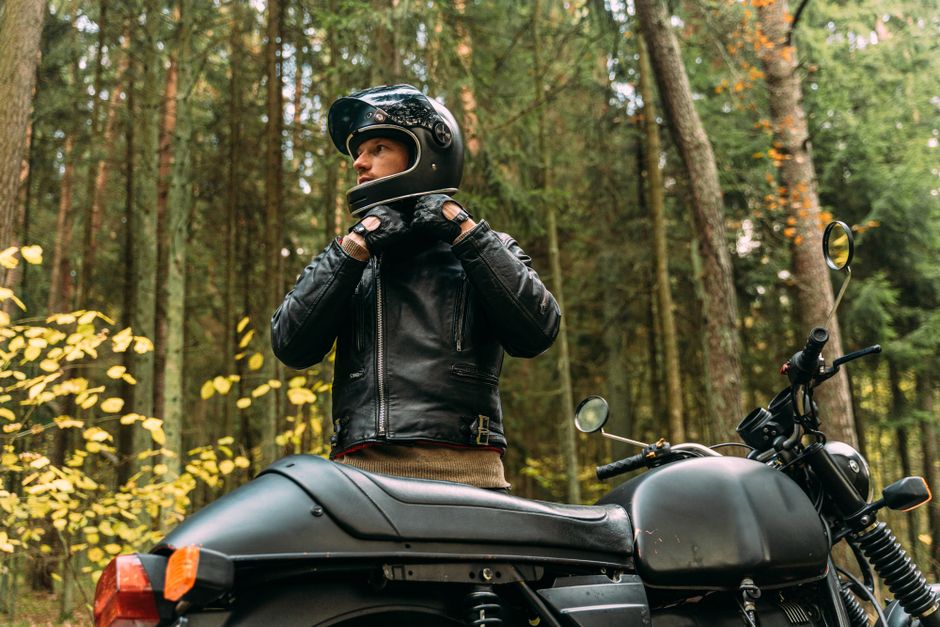
The emotional pull of a dream bike is real. Walk into any dealership and the supersport section gleams with aggressive styling and triple-digit horsepower figures. A 600cc inline-four looks like the bike you have wanted since you were a teenager. But that machine was designed for the racetrack, not for someone learning clutch control in a parking lot. The terrified beginner feeling is valid. Acknowledging it is the first step toward choosing a bike that builds confidence rather than eroding it.
When making your first motorcycle purchase, try to focus on models that emphasize safety and ease of handling.
Resale value also matters more for beginners than for any other buyer. You will likely sell this bike within 12 to 18 months. Your skills will grow, your preferences will sharpen, and the bike that served you well as a learner will make room for something more specialized. Buy smart now and you will recover most of your money when that day comes.
Understanding the resale value of your first motorcycle purchase can help you make a more informed decision about your options.
Step 1: The Pre-Purchase Checklist (Before You Even Browse Listings)
Do not open Facebook Marketplace or Cycle Trader yet. There are two things you need to handle first. Skipping either one will cost you time, money, or both.
Take a Motorcycle Safety Foundation (MSF) Course First
The Motorcycle Safety Foundation Basic RiderCourse is non-negotiable. It is the single most important step in your journey. Over a weekend, you will spend roughly five hours in a classroom and ten hours on a motorcycle. The school provides a small-displacement bike, usually a 125cc or 250cc model. You learn throttle control, braking, cornering, and emergency maneuvers in a controlled lot with trained instructors watching every move.
Completing your MSF course will also prepare you for the realities of your first motorcycle purchase, giving you essential skills for safe riding.

Completing the MSF course waives the riding test for your motorcycle endorsement in most states. That alone saves you a trip to the DMV and the stress of a high-pressure skills exam. Many insurance companies also offer a discount, typically 10 to 15 percent, for riders who present an MSF completion card. The course costs between $200 and $350 depending on your state. It pays for itself within the first year of coverage.
Get Your Motorcycle Endorsement (State-Specific)
Licensing requirements vary significantly across the United States, and this is a gap most beginner guides ignore entirely. In California, you must hold a motorcycle permit for at least 30 days before taking the skills test. In Texas, the permit is valid for 180 days and restricts nighttime riding and passengers. Florida requires a separate motorcycle endorsement even if you already hold a driver’s license, and helmet laws differ for riders over 21 who carry sufficient insurance coverage.
Researching licensing requirements will help you plan for your first motorcycle purchase more effectively.
Check your state’s DMV website for the 2026 rules before you spend a dollar on a bike. Some states accept the MSF completion card as a full waiver of the riding test. Others still require a written exam at the DMV. Knowing the timeline helps you plan when to start shopping and when you can legally ride your new bike home.
Step 2: Budgeting for Your First Motorcycle Purchase (The Real Cost)
Budgeting ahead for your first motorcycle purchase can significantly ease the financial burden.
Most first-time buyers fixate on the sticker price and forget everything else. That is a mistake. The bike is only part of the total cost, and the hidden expenses add up fast.
Securing financing before your first motorcycle purchase can give you a clearer picture of your budget constraints.
Bike Price: New vs. Used
Used is the smart play for your first motorcycle purchase. A three to five year old Japanese bike from Honda, Yamaha, Kawasaki, or Suzuki offers the best combination of reliability, parts availability, and low depreciation. A used Kawasaki Ninja 400 or Honda Rebel 300 in good condition can be found for $3,500 to $4,500. When you sell it in a year or two, you will likely get most of that money back.
New bikes start around $5,000 MSRP, but the out-the-door price tells a different story. Dealer fees for freight, setup, and documentation routinely add $1,000 to $1,500. A $5,299 Ninja 400 becomes a $6,800 purchase before you factor in tax and registration. If you can pay cash, do it. If you must finance, credit unions typically offer better rates than dealer financing for first-time buyers. Avoid loans with rates above 8 percent. A high-interest loan on a depreciating asset is a financial trap that follows you long after the new-bike smell fades.
The Hidden Costs (Gear, Insurance, Registration)
Gear is mandatory, not optional. Budget $800 to $1,200 minimum for a complete set of protective equipment. A DOT and ECE certified full-face helmet runs $200 to $500. A motorcycle-specific jacket with armor costs $150 to $300. Gloves are $50 to $100. Boots that cover your ankles and provide crush protection are $100 to $200. Riding pants with knee armor add another $100 to $250. This is not an area to cheap out. Road rash hurts. Broken ankles take months to heal. Buy the gear before you buy the bike.
Investing in quality gear is part of being responsible with your first motorcycle purchase.
Insurance is not optional either, and rates for new riders can be eye-opening. A 2026 quote for a new rider in their twenties on a Ninja 400 typically falls between $600 and $1,200 per year for full coverage. The same rider on a 600cc supersport can expect $2,000 to $3,500 annually. Even a modest cruiser like a Honda Rebel 500 will run $400 to $800. Get quotes before you commit to a specific model. Progressive and Geico both offer online motorcycle quote tools that take five minutes to use.
Understanding insurance costs related to your first motorcycle purchase is crucial for budgeting and financial planning.
Registration and sales tax vary by state but plan for 6 to 10 percent of the purchase price. On a $4,000 used bike, that is $240 to $400. On a $7,000 new bike, it is $420 to $700. Title transfer fees add another $25 to $75. These numbers are not incidental. They are part of the real budget.
Setting aside funds for registration is an essential part of your first motorcycle purchase.
Step 3: Choosing the Right Bike (The “Goldilocks” Zone)
The motorcycle market is vast. Narrowing it down requires clear rules. The goal is a bike that is powerful enough to keep you engaged but forgiving enough to let you learn without fear.
Finding the right bike for your needs is a critical part of your first motorcycle purchase experience.
The Power Rule: “No More Than Two Cylinders”
RevZilla’s Lemmy popularized a simple rule for beginners: no more than two cylinders. This rule eliminates the inline-four engines found in 600cc and 1000cc supersport bikes. Those engines produce power in a frantic, high-revving rush that punishes small throttle mistakes. A beginner who accidentally grabs too much throttle on a 600cc sportbike can find themselves at triple-digit speeds in seconds.
Always remember that the power of your bike should match your skill level during your first motorcycle purchase.
The ideal beginner engine is a single-cylinder thumper or a parallel-twin in the 300cc to 500cc range. These engines deliver predictable, linear power. They are tractable at low speeds and still capable of highway cruising. The Kawasaki Ninja 400 and Z400 use a 399cc parallel-twin that produces about 45 horsepower. The Yamaha MT-03 uses a 321cc twin with 42 horsepower. The Honda Rebel 300 and 500 offer cruiser ergonomics with single-cylinder and twin-cylinder options respectively. These bikes are not slow. They are appropriately quick for someone building fundamental skills.
The right beginner bike will enhance your confidence during your first motorcycle purchase.
The YouTube Tier System (Simplified)
Using a tier system for categorizing bikes can help streamline your first motorcycle purchase process.
Chaseontwowheels created a memorable framework for categorizing beginner bikes, and it is worth repeating here.
The “Please Don’t” tier includes any 1000cc supersport: the BMW S1000RR, Yamaha R1, Honda CBR1000RR, and their peers. These machines produce 180 to 205 horsepower, cost $18,000 to $30,000, and are designed for expert riders on closed circuits. Dropping one in a parking lot can cost thousands in fairing repairs. Insurance for a new rider on any of these bikes is astronomical.
The “Yeah, Still Too Much” tier covers 650cc to 900cc sport and naked bikes. The Suzuki SV650, Yamaha MT-07, and Triumph Street Triple are fantastic motorcycles. Some cautious beginners have started on them successfully. But they produce 70 to 115 horsepower and weigh more than the 300cc to 500cc class. For an absolute beginner with zero riding experience, the margin for error shrinks considerably.
Avoiding high-powered bikes during your first motorcycle purchase is vital for your safety.
The sweet spot is the 300cc to 500cc twin-cylinder class. These bikes weigh between 350 and 400 pounds wet. They are light enough to catch if you lose balance at a stoplight. They are forgiving enough to handle a botched downshift without locking the rear wheel. They are fun enough to keep you smiling through your first full riding season and beyond.
Finding a bike that is forgiving will make your first motorcycle purchase much more enjoyable.
Fit and Ergonomics for All Riders
Seat height is the number that matters most when you swing a leg over a bike. The Honda Rebel 300 sits at just 27.2 inches, making it one of the most accessible cruisers for shorter riders. The Kawasaki Z400 has a 30.9 inch seat height, which suits riders of average height. The Yamaha MT-03 splits the difference at 30.7 inches. You want both feet to reach the ground comfortably, or at least the balls of both feet with solid control.
Choosing the right fit is essential for your comfort during your first motorcycle purchase.
Weight is equally important. A beginner should aim for a wet weight under 400 pounds. The Honda Rebel 1100 weighs over 500 pounds and is simply too heavy for a first bike. You will be maneuvering at low speeds, backing into parking spaces, and potentially catching the bike when it starts to tip. Every extra pound works against you.
Ensuring you can manage your bike’s weight is a key factor in your first motorcycle purchase.
Women and shorter riders face a market that often assumes a six-foot rider. This is a gap in most beginner guides, and it deserves direct attention. If your inseam is under 28 inches, look at the Yamaha V-Star 250, Honda Rebel 300, or Honda Grom. Lowering links can drop a bike’s seat height by one to two inches, though they affect suspension geometry and should be installed by a professional. Narrower seats also help shorter riders get their legs down. Some manufacturers offer factory low-seat options. Do not let a salesperson talk you into a bike that feels too tall. Confidence comes from control, and control starts with being able to plant your feet.
Considering options for shorter riders will help make your first motorcycle purchase more accessible.
Step 4: The Test Ride and Inspection (Do Not Skip This)
Conducting a thorough inspection is vital to ensuring a smooth process with your first motorcycle purchase.
If you completed the MSF course, you have the baseline skills to test ride a bike. If you have not taken the course yet, bring a friend who rides. That friend can evaluate the bike’s mechanical condition and ride it home if you buy it.
For used bikes, a visual inspection tells you a lot. Check the chain for rust and proper tension. A neglected chain suggests neglected maintenance overall. Look at the tire sidewalls for the date code. Tires older than five years need replacement, even if the tread looks deep. Inspect the fork seals for oil leaks. A thin film of oil on the fork tube means the seals are blown and need replacement. Start the bike cold. A seller who warms up the engine before you arrive may be hiding a hard-start problem. Listen for rattles, knocks, or irregular idle.
Being methodical during your test ride can lead to a successful first motorcycle purchase.
Trust your gut during the test ride. If the bike feels too tall, too heavy, or too aggressive in the first five minutes, walk away. There is no shortage of beginner-appropriate motorcycles on the market. You are not missing out on a once-in-a-lifetime deal. You are making a decision that affects your safety and enjoyment for the next year or more.
Accept that you will probably drop your first bike. It happens in parking lots, at stop signs, and during low-speed turns. A used Japanese bike costs $200 to $500 to repair when it tips over. A new Ducati or BMW costs thousands. Frame sliders and engine guards are cheap insurance. Install them before your first ride.
Accepting that drops might happen prepares you for the realities of your first motorcycle purchase.
Step 5: Finalizing the Deal (Paperwork and Payment)
For private sales, protect yourself with documentation. Get a bill of sale that includes the seller’s name, your name, the VIN, the sale price, and the date. Verify that the title is clean and free of liens. Check that the VIN on the title matches the VIN stamped on the frame. A mismatched VIN is a dealbreaker. Meet at a bank or a public place with cameras. Bring a friend.
For dealer purchases, negotiate the out-the-door price, not the monthly payment. Dealers love to stretch loan terms to make payments look small while the total cost balloons. Dealer fees for freight, setup, and documentation can add over $1,000 to the advertised price. Ask for an itemized OTD quote before you sign anything. If you are financing, secure pre-approval from a credit union first. That pre-approval gives you leverage. If the dealer can beat your credit union’s rate, great. If not, you already have financing in hand.
Understanding the paperwork involved is key to ensuring your first motorcycle purchase goes smoothly.
Frequently Asked Questions About Your First Motorcycle Purchase
Clarifying your questions about your first motorcycle purchase can lead to a better overall experience.
Should I buy a scooter instead?
If your riding is limited to city streets and you want the lowest barrier to entry, a scooter is a legitimate option. Scooters offer automatic transmissions, built-in storage, and excellent fuel economy. They are not highway-capable in most cases, but for urban commuting, they are practical and affordable first vehicles.
How much should I spend on my first motorcycle?
Your total budget, including gear and insurance, should fall between $4,000 and $7,000. The bike alone should cost $2,500 to $5,000 on the used market. Spending more does not buy you a better learning experience. It buys you more expensive mistakes.
Can I start on a 600cc sportbike?
Technically yes. Many people have done it. But the YouTube tier system and RevZilla’s two-cylinder rule both strongly advise against it. The learning curve is steep, the insurance is punishing, and the ergonomics are aggressive. A 600cc supersport is a second bike, not a first.
Your budget should reflect not only the cost of the bike but also the realities of your first motorcycle purchase.
What is the best first motorcycle brand?
Honda, Yamaha, Kawasaki, and Suzuki dominate for reliability, parts availability, and dealer networks across the United States. Avoid premium European brands like Ducati, BMW, and KTM for your first bike. They cost more to buy, more to insure, and far more to repair when you drop them.
