
Introduction
Some clothes go out of fashion in a season. Jackets — the good ones — just keep going.
Walk into any vintage store and you’ll find leather jackets from the 1980s that look better than most things on the market today. Pull up any red carpet photo from the past five decades and there’s someone in a tailored sports jacket looking sharper than everyone around them.
These aren’t fashion accidents. Both leather jackets and sports jackets have stayed relevant because they actually work — on real people, in real situations, across decades of changing trends.
But buying a jacket, especially online, is harder than it should be. There’s a lot of noise around “premium quality” and “timeless style,” and most of it doesn’t tell you what you actually need to know: what to look for, how different styles differ, and what separates a jacket you’ll wear for ten years from one you’ll donate after two.
This guide covers all of that — honestly, without the fluff.
Why Leather Jackets Never Go Out of Style
Leather jackets have been around in their current form since at least the early 20th century. Military aviators wore them. Marlon Brando wore one in The Wild One in 1953, and the cultural image stuck. Punk wore them. Heavy metal wore them. And then, somehow, so did high fashion.
That staying power isn’t accidental. It comes down to a few things that don’t change:
The material does the work for you. Good leather develops a patina — a natural aging — that makes the jacket look more interesting over time, not less. A well-worn leather jacket has character that synthetic materials can’t replicate.
The silhouette is already solved. The basic leather jacket shape (fitted body, ribbed cuffs, front zipper) has stayed largely the same for decades. There’s no reinventing a wheel that already works. Designers add variations — lapels, belts, different collars — but the core form stays familiar.
It works across contexts. A black leather jacket over a white t-shirt reads as casual. The same jacket over a button-down and dark trousers reads as put-together. Very few pieces span that range without looking awkward.
For women, the appeal is similar but with more flexibility in cut. Women’s leather jackets tend toward softer silhouettes — longer hems, cropped lengths, moto-style cuts with asymmetric zippers — and pair easily with everything from dresses to tailored trousers.
Men’s leather jackets tend to lean into structure. The biker silhouette still dominates, but racer jackets, field jackets, and longer overcoat-style leather pieces have picked up serious traction in recent seasons.

Why Sports Jackets Are a Wardrobe Essential
The sports jacket occupies a specific and useful space in a wardrobe: formal enough to take a meeting, casual enough to wear to dinner, and structured enough to make almost any outfit look deliberate.
Unlike a suit jacket — which comes as part of a matched set and carries specific formality signals — a sports jacket is designed to be mixed with other pieces. Dark jeans and a sports jacket is a classic combination for a reason. It gives you the polished look of a suit without the rigidity.
A few reasons they’ve stayed relevant:
They’re genuinely versatile. A navy or grey sports jacket pairs with chinos, denim, trousers, and even some smart casual trousers with ease. You’re not buying a jacket — you’re buying an outfit multiplier.
The fabrics have expanded. Traditional sports jackets came in tweed, flannel, or wool. Today, you’ll find them in linen, cotton blends, knits, and technical fabrics. That means a sports jacket can work in summer as well as winter, depending on the weight.
They photograph well. This sounds trivial but it matters. For anyone who has to look presentable on video calls or in professional photos, a sports jacket does more work per dollar than almost any other garment.
For women, the blazer-style sports jacket has been a fixture of professional wardrobes for decades. The past few years have pushed it further into casual wear — oversized blazers worn as outerwear, cropped blazers over dresses, and linen sports jackets worn in warmer months.
The short version: if your wardrobe skews casual, a leather jacket probably covers more daily situations. If you’re dressing for professional or smart casual contexts more often, a sports jacket is the faster route to looking put-together. Most people with an active wardrobe would benefit from owning both.
How to Choose the Perfect Jacket
This is where most buying guides get vague. “Choose quality materials” is useless advice without specifics. Here’s what actually matters.
For leather jackets:
Leather type changes everything. Full-grain leather is the highest quality — it uses the top layer of the hide and develops a rich patina over time. Top-grain leather is sanded down and more uniform but slightly less durable. Genuine leather is a catch-all term that includes lower-quality layers of the hide. If a listing just says “genuine leather,” ask more questions.
Check the lining. Cheap linings tear, separate from the jacket body, and trap odors. A good lining — usually viscose, satin, or a synthetic blend — should feel smooth and lay flat inside the jacket.
Try the zipper. YKK zippers are the industry standard. A stiff or cheap-feeling zipper on an otherwise “premium” jacket is a red flag.
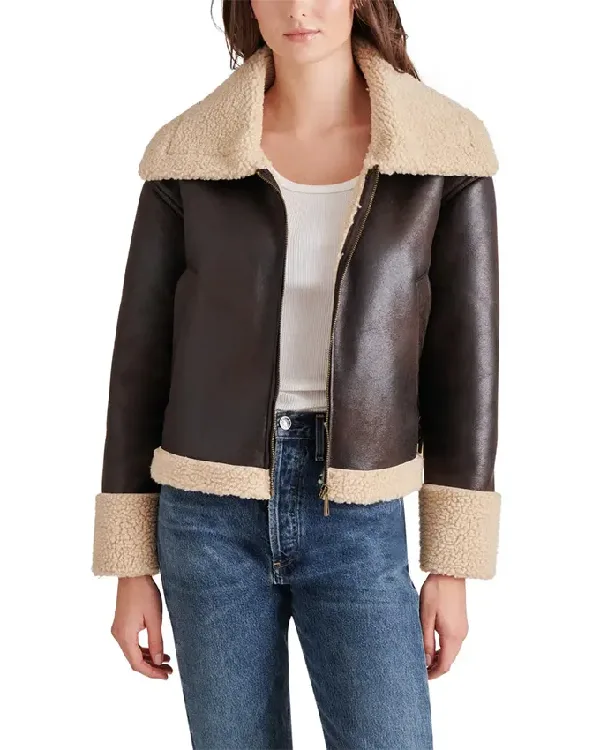
Fit is non-negotiable. Leather doesn’t stretch the way fabric does. If it’s tight in the shoulders when you try it on, it will stay tight. The shoulder seam should sit right at the edge of your shoulder, and the sleeves should hit at your wrist with arms extended.
For sports jackets:
Fabric weight matters by season. A heavy wool sports jacket in summer is uncomfortable. A linen jacket in winter is underdressed for the cold. Check the fabric composition and weight before buying.
Shoulder construction tells you a lot. Padded shoulders versus natural shoulders give different silhouettes. Natural-shoulder construction (softer, with less padding) has been dominant in recent seasons. It tends to look more relaxed and works better with casual clothes.
Check the button stance. A single-button jacket has a lower button stance that sits at or below the natural waist, giving a longer, leaner look. Two-button jackets are more traditional. Your body type and the look you want should guide this.
Consider the collar roll. A sport jacket with a well-cut lapel and natural collar roll (where the lapel drapes instead of lying flat) is a sign of better construction.
Tips for Buying High-Quality Jackets Online
Buying outerwear online removes the most useful tool you have: trying it on. That doesn’t mean online shopping is a bad idea — it just means you need to be more careful.
- Read the return policy before you read anything else. If a retailer doesn’t offer easy returns for clothing, that’s information about how confident they are in their sizing.
- Look for size charts with body measurements, not just S/M/L. A chest measurement in centimeters or inches is useful. A size “Medium” is not.
- Read reviews that mention fit, not just appearance. “Beautiful jacket” tells you nothing. “Runs small in the shoulders” is actually useful.
- Look at product photos on models your height and build when possible. Most retailers list the model’s height and the size worn. Use this to calibrate.
- Check whether photos show the lining and interior hardware. Good retailers show you everything. Vague product pages with only one or two front-facing shots are worth approaching skeptically.
- Ask customer service questions before you buy. How a brand responds to pre-purchase questions tells you a lot about how they’ll respond to post-purchase problems.
- Avoid listings that use vague language about materials. “Leather-look,” “faux leather” (without specifying the material), or “leather-style” without any composition details are worth investigating further before committing.
When shopping online for premium leather jackets and sports jackets, it helps to shop with retailers who are transparent about craftsmanship details. One option worth knowing is a dedicated outerwear store that focuses specifically on men’s and women’s leather and sports jackets — with detailed product information, genuine customer reviews, and a customer service team that can answer fit questions before you order. That kind of specialization usually means better sourcing and more useful product information than general fashion marketplaces.
How to Care for Your Jacket
A good jacket is an investment. How you care for it determines whether it lasts two years or twenty.
For leather jackets:
- Condition the leather every three to six months. Leather dries out, especially in low-humidity climates or during winter. A leather conditioner (like Leather Honey or a similar product) keeps it supple and prevents cracking.
- Keep it away from direct heat. Radiators, direct sunlight, and car interiors on hot days all dry out leather faster than normal wear.
- Let it air dry if it gets wet. Don’t use a hair dryer or put it near a heater. Pat off excess water gently and let it dry at room temperature.
- Store it hanging, not folded. Folded leather develops permanent creases. Use a wide, sturdy hanger — a thin wire hanger will deform the shoulders over time.
- Clean surface stains with a damp cloth, not a wet one. Saturating leather with water can leave water marks. A lightly damp cloth and gentle circular motion handles most surface dirt.
- Get professional cleaning for serious stains. Don’t experiment with household cleaners on leather. A leather specialist knows what each type of hide can handle.
- Use a breathable garment bag for storage. Plastic traps moisture. A fabric or canvas garment bag protects without cutting off airflow.
For sports jackets:
- Follow the care label exactly. This sounds obvious, but most people don’t. Wool sports jackets usually require dry cleaning. Linen and cotton may be hand-washable, but machine washing can damage the structure.
- Hang immediately after wearing. Sports jackets lose their shape when left crumpled. A cedar hanger (slightly contoured, not wire) is ideal.
- Steam instead of ironing when possible. Irons can crush the fibers of wool and flatten the texture of structured fabrics. Steaming from a distance of a few inches removes wrinkles without contact.
- Allow 24 hours between wearings. Natural fabrics benefit from resting time — it allows fibers to recover their shape.
- Brush wool and tweed regularly. A soft-bristled garment brush removes surface lint and dust without washing, which extends the time between dry cleans.
Current Fashion Trends
The jacket market in 2026 has some clear directions — both for leather and sports styles.
In leather jackets: The oversized silhouette has held on, especially for women’s styles. Oversized leather bombers and long leather coats have moved from streetwear into broader mainstream fashion. For men, the clean moto jacket has come back to a cleaner, less-embellished version of itself — minimal hardware, solid colors, tighter fit through the body.
Color has expanded beyond black. Tan, caramel, chocolate brown, and a resurgent interest in burgundy have made colored leather jackets much easier to find and more accepted in everyday wear. Cream and off-white leather jackets have been gaining traction for women particularly.
In sports jackets: Unstructured construction is dominant right now — softer shoulders, minimal lining, and a more relaxed drape that works with casual trousers or jeans. The herringbone and glen plaid patterns have been strong for fall, while linen and cotton weaves continue to hold ground for spring and summer wear.
The “elevated casual” direction in men’s fashion has been good for the sports jacket in general. When the dress code ambiguity between casual and professional collapses into “just look good,” a sports jacket is usually the answer.
For women, oversized blazer-style sports jackets worn as standalone pieces — not paired with matching trousers — have been consistent across multiple seasons. Chalk-stripe blazers and bold plaid sports jackets have done well in women’s fashion specifically.
Sustainability in outerwear: More buyers are asking about material sourcing and production conditions before buying. Leather outerwear specifically has faced questions around environmental impact and animal welfare. Some brands have responded with certified sustainable leather (look for Leather Working Group certification) or high-quality plant-based alternatives. This is a conversation worth having with any retailer you buy from.
Conclusion
A jacket worth buying is worth thinking about.
The difference between a leather jacket you’ll keep for fifteen years and one that falls apart after two isn’t always price — it’s knowing what to look for, where to buy, and how to take care of it once you have it. The same is true for sports jackets: the construction details, fabric weight, and shoulder cut make a far bigger difference than the brand name on the label.
Whatever your wardrobe situation — building from scratch, filling in gaps, or replacing something that finally gave out — the principles here stay the same. Buy for fit first, material second, and style third. Take care of what you own. And when you’re ready to shop, look for retailers who can answer your questions, show you the details, and stand behind what they sell.
Good outerwear doesn’t have to be complicated. It just has to be right.
Frequently Asked Questions
1. What is the difference between a leather jacket and a sports jacket? A leather jacket is a casual to smart-casual outerwear piece made from animal or synthetic leather, often associated with biker, moto, or bomber styles. A sports jacket is a structured fabric jacket — usually in wool, linen, or cotton — designed for smart casual to semi-formal occasions. The two serve different dress-code functions, though both are versatile in their own contexts.
2. How do I know if a leather jacket is genuine leather? Genuine leather has an irregular grain pattern — no two areas look exactly the same. It also has a distinct smell that faux leather doesn’t fully replicate. On the edges (especially around pockets and hem), real leather will look slightly rough or fibrous, while faux leather tends to look perfectly uniform and sometimes peels. Product listings should specify the hide type: full-grain, top-grain, or genuine leather are all real leather; “vegan leather,” “PU leather,” or “faux leather” are synthetic.
3. Can women wear men’s leather jackets, and vice versa? Yes, and many people do intentionally. Oversized men’s leather jackets on women have been a recurring trend for years. The main consideration is shoulder width — men’s jackets are cut wider through the shoulders, which affects how the jacket hangs. Some people prefer this look; others find it uncomfortable. If you’re buying across gender sizing, focus on the shoulder seam placement first.
4. How often should I condition a leather jacket? Every three to six months is a reasonable interval for most climates. If you live somewhere very dry, or if you wear the jacket frequently in cold weather, you might condition it closer to every three months. Signs that leather needs conditioning include a slightly stiff feel, visible dryness or fading in color, or small surface cracks beginning to form.
5. Are sports jackets suitable for casual wear? Yes — in fact, that’s increasingly their primary function. A sports jacket in a casual fabric (linen, cotton, or an unstructured wool blend) worn over a plain t-shirt, with dark jeans and clean leather shoes or loafers, works well for most smart casual situations. The key is keeping the rest of the outfit relaxed enough to match the informality of the setting. Avoid very formal fabrics like heavily structured wool with casual pieces — the contrast reads as mismatched rather than intentional.