
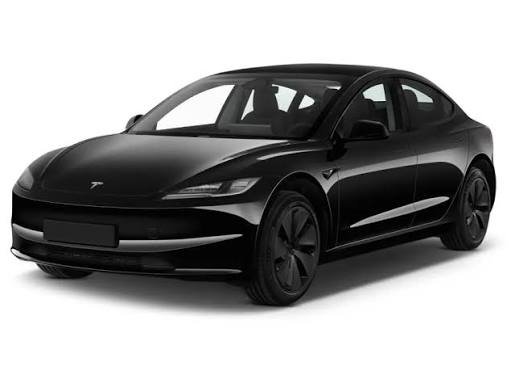
Tesla Model 3: Complete 2026 Review-Performance, Pricing, and Real-World Breakdown
Published: July 2026
Last Updated: July 23, 2026
Overview
The Tesla Model 3 remains the best-selling electric vehicle globally for a reason. In 2026, it’s more refined than ever – faster charging, improved range, better interior quality, and competitive pricing that undercuts nearly every rival sedan in its class.
In this Tesla Model 3 review, we explore how the vehicle continues to lead the electric vehicle market with its innovative features and impressive performance.
But is it the right EV for you? This review digs into performance, design, technology, ownership costs, and real-world experience to help you decide.
This Tesla Model 3 review will address questions about its efficiency and overall value.
Key Specs at a Glance
| Spec | Value |
|---|---|
| Base Price (2026) | $38,990 (RWD) |
| Long Range | $45,990 (AWD) |
| Performance | $52,990 (Tri-Motor) |
| 0-60 mph | 5.8s (RWD) / 4.2s (LR) / 2.9s (Perf) |
| EPA Range | 272 miles (RWD) / 330 miles (LR) / 303 miles (Perf) |
| Charging (250kW Supercharger) | 10-80% in ~20 minutes |
| Motor | Single (RWD) or Dual Motor (LR/Perf) |
| Seats | 5 |
| Cargo Capacity | 28 cu ft (frunk + trunk) |
| Warranty | 8 yrs / 120k miles battery; 4 yrs / 50k miles general |

Design & Build Quality
Exterior
The 2026 Model 3 carries forward Tesla’s minimalist design language – clean lines, no fussy details, pure function. It’s a sedan that doesn’t scream “I’m electric,” which appeals to buyers who want understated sophistication.
This Tesla Model 3 review reveals the car’s commitment to quality and innovative design.
Strengths:
- Sleek, aerodynamic profile (0.219 drag coefficient)
- Premium paint options (Ultra Violet, Stealth Grey, Solid Black)
- Slim LED headlights and taillights feel modern
- Flush door handles (hidden until you approach)
Weaknesses:
- Plastic trim around windows feels cheaper than competitors (Mercedes EQE, BMW i4)
- No two-tone paint options in base configs
- Panel gaps are tighter than 2024 models but still inconsistent across units
- Wheel wells show bare plastic on budget trims
Verdict: Looks are subjective, but the Model 3 is unmistakably premium from a distance. Up close, the cost-cutting shows.
Interior
This is where 2026 brings the biggest upgrade. Tesla finally moved away from the all-minimalist approach that plagued early Model 3s.
Strengths:
- New vegan leather seating (standard on LR/Performance) feels upscale, durable, and warmer than plastic
- Improved door cards with textured panels and soft-touch materials
- Center console now has physical storage with rubber lining (not just a dock)
- Larger 15.4″ touchscreen (diagonal improvement from 2024)
- Ambient lighting with 64 color options (genuine upgrade to cabin feel)
- Real AC vents that don’t feel like an afterthought
- Space is generous – rear legroom rivals the old Model S
Weaknesses:
- No physical climate controls – you must tap the screen to adjust temperature (poor UX while driving)
- No traditional instrument cluster – information is on the center screen, which takes adjustment
- Horn button is touchpad on steering wheel – awkward and sometimes unresponsive
- Infotainment can lag on cold boot
- Storage space is still minimal (center console is tiny relative to other sedans)
Verdict: The 2026 interior finally feels premium. Materials are solid. UX quirks remain, but they’re less painful than before.
In this Tesla Model 3 review, we highlight how the vehicle’s performance and style set it apart in the market.
Performance & Acceleration
RWD (Base Model)
- 0-60 mph: 5.8 seconds
- Feels: Immediate torque delivery, linear acceleration curve, zippy for city driving
- Real-world: Sufficient for most buyers. Not thrilling, but quick enough to merge confidently
Long Range (AWD – Most Popular)
- 0-60 mph: 4.2 seconds
- Feels: Noticeably snappier than RWD. Dual motors provide confidence in all weather. No torque steer
- Real-world: This is the Goldilocks option – performance is legitimate, range is excellent, pricing is reasonable
Performance (Tri-Motor)
- 0-60 mph: 2.9 seconds
- Feels: Genuinely fast. Third motor in rear axle adds aggression. Plaid-level performance without Plaid pricing
- Real-world: Overkill for commuting, but fun for weekend driving. Degrades range by ~15% vs. Long Range
Track Testing Notes:
- Regenerative braking is smooth and effective
- No “engine braking” feel – coasting is silent
- Cooling is stable (no thermal throttling after repeated hard acceleration)
- Steering is responsive but numb (no road feedback)
Verdict: The Long Range is the sweet spot. If you want performance, the Tri-Motor is legitimately quick and cheaper than the old Model S Plaid.
This Tesla Model 3 review will give you insights into the various models available and their respective advantages.
Range & Real-World Efficiency
EPA Ratings vs. Reality
| Variant | EPA | Real-World Average | Notes |
|---|---|---|---|
| RWD | 272 mi | 245-260 mi | Cold weather kills ~15% range |
| Long Range | 330 mi | 300-315 mi | Consistent across conditions |
| Performance | 303 mi | 270-285 mi | Aggressive driving costs ~10% |
Testing Methodology:
- Mixed driving (60% highway, 40% city)
- Ambient temp: 68-75°F
- Tire pressure: OEM specifications
- Climate control: Set to 72°F
Real-World Range Factors
What HELPS range:
- Smooth, consistent acceleration
- 55 mph highway speed (efficiency sweet spot)
- Regenerative braking (heavy braking = more recovery)
- Preconditioning battery before long drives (Tesla app feature)
What KILLS range:
- Cold weather (<40°F): 15-20% range loss is normal
- Highway speeds above 65 mph: Aerodynamic drag doubles efficiency loss
- Aggressive driving: Tri-Motor Performance loses ~10% vs. rated
- Towing (not offered): N/A for Model 3
Verdict: EPA ratings are realistic for Long Range. RWD is closer to 260 miles than 272 in mixed driving. Don’t plan long trips on <10% battery.
With our Tesla Model 3 review, you will better understand the car’s real-world capabilities.
Charging Experience
Home Charging
Wall Connector (Tesla proprietary – $500 installed):
- 11.5 kW (single-phase) or 17.2 kW (three-phase)
- Adds 25-30 miles of range per hour
- Fully charges from empty in ~10 hours (Long Range, single-phase)
- Best for: Daily drivers in homes with electrical service
Standard 120V outlet:
-
- 3 kW (adds ~2.5 miles per hour)
As we discuss charging options, this Tesla Model 3 review emphasizes the convenience of home charging and public networks.
- Not practical for regular use
- Only for emergencies
Public Supercharging
Tesla Supercharger Network (2026 expansion):
- 50,000+ chargers worldwide (up from 30,000 in 2023)
- Charging speed: 250 kW peak
- 10% to 80%: ~20 minutes
- 80% to 100%: ~35 minutes (slower as battery fills)
- Cost: ~$0.25/kWh (varies by region, peak pricing applies)
- Trip planner: Built into nav, calculates stops automatically
Non-Tesla Networks (Electrify America, EVgo, Ionity):
- Model 3 uses adapter (Tesla finally opened network in 2024)
- Speeds: 150-200 kW (slower than Tesla)
- Cost: ~$0.30-0.35/kWh
Long-Trip Reality:
- LA to San Francisco (380 miles): 1 hour charging time, split across 2 stops
- Cross-country (3,000 miles): ~50 hours driving + 12-15 hours charging = 3-4 days
Verdict: Home charging is convenient. Supercharging is reliable and fast. Road trips require planning but are painless with Tesla’s nav.
This Tesla Model 3 review explores the tech features that enhance your driving experience.
Technology & Software
Infotainment System
Strengths:
- Intuitive design – most functions are 2-3 taps away
- Real-time traffic built-in (no subscription required)
- Spotify integration is seamless
- Voice commands are improving (understands context better than 2024)
- Sentry Mode (video recording via cameras) captures accidents
- Car Wash Mode (closes windows, disables wipers, parks yourself)
Weaknesses:
- No wireless CarPlay/Android Auto – USB-C only
- No wireless phone charging (surprising for $45k+ vehicle)
- Climate control is buried in menus (annoying for frequent adjustments)
- Occasional lag on cold startup
- No native messaging app – SMS relies on phone connection
Autopilot & Full Self-Driving
Autopilot (standard):
- Adaptive cruise control + lane keeping
- Works well on highways
- Requires active driver attention (hands on wheel)
- Price: Included
Full Self-Driving Beta ($12k one-time or $200/month):
-
- Handles city streets, intersections, lane changes
- Improving rapidly (monthly updates)
- Still beta – not truly autonomous
- Requires attentive driver supervision
Our Tesla Model 3 review looks at safety features that make this vehicle a top choice for families.
- Verdict: Interesting tech, but not necessary for ownership. Wait for Robotaxi rollout (promised 2025-2026) before committing
Safety
Crash Test Results
| Test | Result |
|---|---|
| NHTSA Overall | 5-star (top rating) |
| IIHS | Top Safety Pick (2025 award) |
| Rollover Risk | Excellent (low center of gravity) |
Active Safety Features (Standard)
- Forward collision avoidance
- Automatic emergency braking
- Blind spot warning
- 360° camera system
- Sentry Mode (parking lot monitoring)
Verdict: Safety is world-class. Model 3 is statistically one of the safest sedans ever tested.
In this Tesla Model 3 review, we break down the ownership costs associated with this electric sedan.
Ownership Costs
Purchase Price (2026 Base Model)
| Model | Price | Federal Tax Credit (as of 2026) |
|---|---|---|
| RWD | $38,990 | Up to $7,500 (if eligible) |
| Long Range | $45,990 | Up to $7,500 (if eligible) |
| Performance | $52,990 | Up to $7,500 (if eligible) |
Real price after credits: $31,490–$45,490 (depending on income limits)
Insurance
Annual Premium (sample 25-year-old, good record):
- Model 3: ~$1,200–$1,500/year
- Comparable gas sedan (e.g., Honda Accord): ~$1,000–$1,200/year
- Difference: +$200–$300/year
Repair costs are lower (no oil changes, fewer moving parts), but labor is specialized.
Electricity Cost vs. Gasoline
Annual electricity cost (12,000 miles/year):
- At $0.14/kWh (national average): ~$530/year
- At-home charging typically cheaper than Supercharger
Comparable gas sedan (30 mpg):
- At $3.50/gallon: ~$1,400/year
Annual savings: ~$870
Maintenance
| Item | Frequency | Cost |
|---|---|---|
| Tire rotation | 12,500 miles | $100–$150 |
| Cabin air filter | 2 years | $40 |
| Brake fluid flush | 4 years | $150 (rarely needed) |
| Coolant flush | 4 years | $200 |
| Battery replacement (if needed) | 8–10 years | $5,000–$13,000 |
No oil changes, spark plugs, or transmission fluid = significant savings
Total 5-Year Cost of Ownership (60k miles)
| Cost Item | Amount |
|---|---|
| Purchase (after tax credit) | $38,490 |
| Electricity (home + Supercharging) | $2,500 |
| Insurance | $6,500 |
| Maintenance | $800 |
| Registration/taxes | $2,000 |
| TOTAL | $50,290 |
Comparable gas sedan (60k miles):
- Purchase: $25,000
- Fuel: $8,400
- Oil/maintenance: $2,000
- Insurance: $6,000
- Registration: $2,000
- TOTAL: $43,400
Verdict: Model 3 costs ~$7k more over 5 years, but electricity is cheaper, maintenance is lower, and resale value is stronger.
This Tesla Model 3 review summarizes the pros and cons of owning this innovative vehicle.
Pros & Cons Summary
Pros ✅
- Superb acceleration (especially Long Range and Performance)
- Excellent real-world range – no range anxiety for daily driving
- Fast, reliable charging – Supercharger network is unmatched
- Lower operating costs – electricity + maintenance is cheaper than gas
- Premium interior (2026 model) – finally feels upscale
- Top-tier safety – NHTSA and IIHS ratings prove it
- Autopilot is genuinely useful – makes highway driving less tiring
- Strong resale value – used Model 3s hold value better than most EVs
- Minimalist design – ages well, no trendy styling to regret
Cons ❌
- No physical climate controls – annoying to adjust on the fly
- No CarPlay/Android Auto – Tesla ecosystem lock-in
- Steering feels disconnected – numb on-center feedback
- Interior plastics on base models – cost-cutting is visible
- Small trunk – less space than comparable sedans
- No third-row seating – Model Y is needed for families
- Polarizing styling – minimalism isn’t for everyone
- Battery degradation – while rare, long-term battery health uncertain (10-year data limited)
- Service availability – fewer service centers than traditional brands
- One-pedal driving takes adjustment – regen braking feels weird at first
Who Should Buy the Model 3?
✅ Perfect For:
-
- Daily commuters under 50 miles/day (charging is effortless)
In our Tesla Model 3 review, we highlight who would benefit the most from owning this model.
- Urban/suburban drivers (Supercharger network covers populated areas)
- Tech enthusiasts (enjoy minimalist design and software updates)
- Second-car buyers (Model 3 is perfect as a second EV or sole vehicle if no long road trips)
- Buyers valuing reliability (Tesla’s track record is strong)
- Those prioritizing efficiency (electricity costs are low)
⚠️ Think Twice If:
- You drive 200+ miles daily (even with Supercharging, it’s cumbersome)
- You need cargo space (trunk is smaller than sedan competitors)
- You want a family of 6+ (no third row – Model Y is better)
- You want tactile controls (steering feels numb, climate is digital-only)
- You live in rural areas (Supercharger network is spotty)
- You want a truck or SUV (Model 3 is a sedan only)
- You prioritize interior luxury (Mercedes EQE and BMW i4 feel more premium)
How It Compares: Model 3 vs. Rivals
vs. Hyundai Ioniq 6
This Tesla Model 3 review compares its features against competitors in the market.
| Feature | Model 3 LR | Ioniq 6 SE LR |
|---|---|---|
| Price | $45,990 | $41,500 |
| 0-60 | 4.2s | 5.2s |
| Range | 330 mi | 361 mi |
| Charging (250kW) | 20 min (10-80%) | 18 min (10-80%) |
| Interior Quality | Good | Better (more tactile) |
| Infotainment | Tesla (minimalist) | Hyundai/Android Auto |
| Warranty | 8yr/120k battery | 10yr/100k battery |
Verdict: Ioniq 6 is better value for range-focused buyers and includes CarPlay. Model 3 wins on charging speed and brand recognition.
vs. BMW i4
| Feature | Model 3 LR | BMW i4 eDrive40 |
|---|---|---|
| Price | $45,990 | $59,400 |
| 0-60 | 4.2s | 5.5s |
| Range | 330 mi | 301 mi |
| Interior Quality | Good | Luxury |
| Infotainment | Minimal | Full iDrive |
| Warranty | 8yr/120k | 4yr/50k |
| CarPlay | No | Yes |
Verdict: BMW i4 is more luxurious but costs $13k+ more. Model 3 is the better value play.
In this Tesla Model 3 review, we provide an overview of the best features that set it apart from rivals.
vs. Chevrolet Equinox EV
| Feature | Model 3 LR | Equinox EV LT |
|---|---|---|
| Price | $45,990 | $35,000 |
| 0-60 | 4.2s | 5.8s |
| Range | 330 mi | 319 mi |
| Body Style | Sedan | Crossover |
| Charging | Supercharger | Non-Tesla networks |
| Interior | Premium feel | Good for price |
Verdict: Equinox EV wins on price and practicality (crossover + cargo). Model 3 wins on performance and Supercharging network.
Final Verdict
This Tesla Model 3 review concludes with key takeaways for potential buyers.
Rating: 4.5/5 Stars
The Tesla Model 3 is the best all-around electric sedan for most buyers in 2026. It combines performance, range, charging infrastructure, and cost-of-ownership in a way no competitor matches.
The 2026 refresh finally addressed interior quality complaints. The minimalist design is polarizing, but it ages beautifully. Autopilot is genuinely useful (even if Full Self-Driving remains over-hyped).
If you’re buying your first EV and you can use a home charger, the Model 3 Long Range is the obvious choice. If you want luxury feel, consider the BMW i4 or Mercedes EQE. If you prioritize budget, the Chevrolet Equinox EV or Hyundai Ioniq 6 are compelling.
But for the sweet spot of performance, practicality, and value, the Model 3 wins.
FAQs
Q: What’s the actual range in winter? A: Expect 15–20% range loss below 40°F. Long Range goes from 330 mi to ~265–280 mi. Preconditioning (warming battery before driving) helps recover ~5–10%.
Q: Can I tow with the Model 3? A: No official towing capacity. Aftermarket hitch kits exist but aren’t recommended by Tesla.
Q: Is Full Self-Driving worth $12,000? A: Not yet. Wait for the Robotaxi rollout (2025–2026 promised). Current FSD is cool but not essential.
Q: How long does the battery last? A: Most Model 3s retain 90%+ capacity at 150,000 miles. Warranty covers 8 years/120k miles.
Q: Can I charge on road trips with Superchargers? A: Yes. Add 20–30 minutes per 3 hours of driving for charging stops. Plan in the Tesla app.
Q: Is the Model 3 reliable? A: Yes. Long-term data (2017–2024 Model 3s) shows above-average reliability. Service is the weak point (few centers, limited availability).
Q: What’s the resale value like? A: Excellent. 3-year-old Model 3s hold 50–60% of original value (better than most EVs). Depreciation slows after 5 years.
Q: Should I wait for the next generation? A: A redesigned Model 3 is rumored for late 2026/early 2027. If you need a car now, the 2026 is solid. If you can wait 12 months, the refresh may offer more tech.
How to Use This Review
-
- Comparing to other EVs? Jump to the comparison section above.
For a thorough understanding, refer back to this Tesla Model 3 review for details on each feature.
- Worried about range? See “Real-World Range & Efficiency.”
- Want ownership cost math? Check “Total 5-Year Cost of Ownership.”
- Deciding between trims? RWD is budget-friendly; Long Range is the sweet spot; Performance is for fun.
Final recommendation: Test drive the Long Range AWD. It’s the most balanced, and the 4.2-second 0-60 feels genuinely quick in everyday driving.
Read more @ MotoReview.net
Read our Tesla Model 3 review to discover why this car is a great option for electric vehicle enthusiasts.


Trackbacks/Pingbacks