
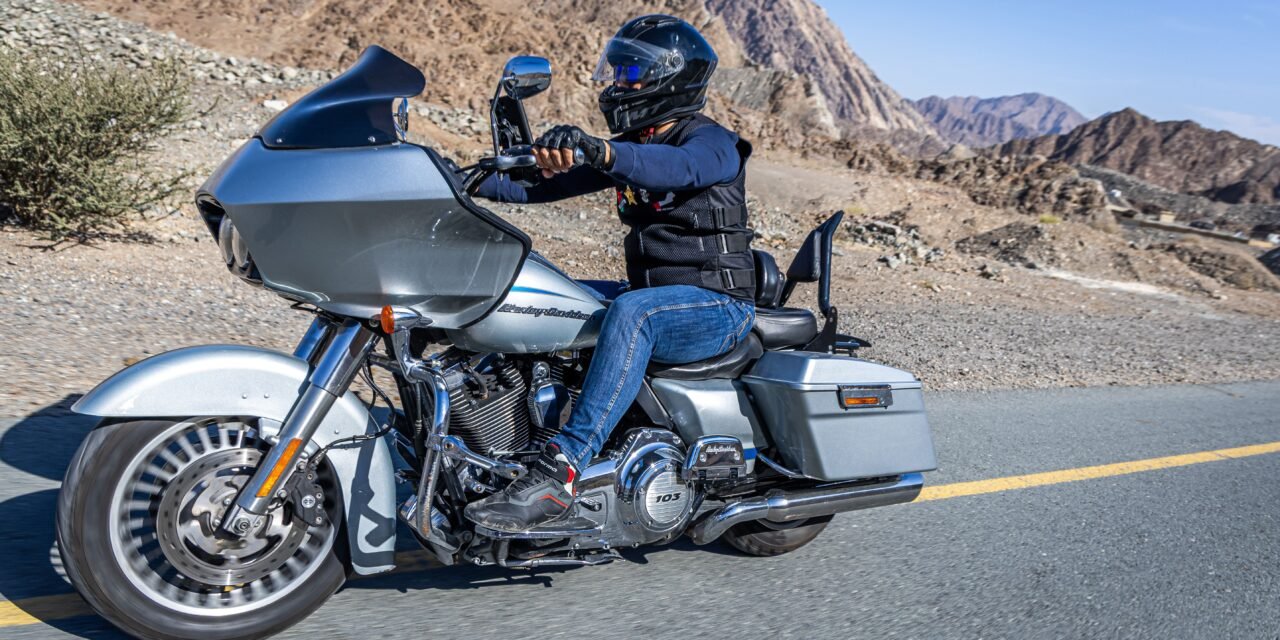
The phrase “Harley Davidson an American Legend” appears on jackets, in book titles, and across decades of marketing, but it represents something far deeper than a branding exercise. It captures a truth about a company that started in a wooden shed, outlasted the Great Depression, armed the Allies in two world wars, and somehow convinced accountants and outlaws alike to ride the same Harley Davidson machine. This article unpacks the full story: the origin, the pop culture weight, the merchandise phenomenon, and the practical questions that current search results leave unanswered, including which model years deserve caution and what that upside-down logo actually means.
Table of Contents
- The Birth of a Legend: From Milwaukee Shed to Global Icon
- The “American Legend” in Pop Culture: Movies, Music, and the 1992 Documentary
- The Merchandise Phenomenon: Why “An American Legend” is a Bestseller
- The Riders’ Guide: Performance, Reliability, and the Years to Avoid
- Harley-Davidson Trivia: Logo Myths, Rare Colors, and Best Books
- The Future of the Legend: Market Challenges and the 2026 Rider
- Frequently Asked Questions
- Conclusion
The Birth of a Legend: From Milwaukee Shed to Global Icon
In 1901, a twenty-year-old draftsman named William S. Harley sketched plans for a small engine designed to fit into a bicycle frame. By 1903, he and his childhood friend Arthur Davidson had built their first motorized bicycle in a 10-by-15-foot wooden shed on Milwaukee’s north side. The shed had “Harley-Davidson Motor Company” scrawled on the door, an act of optimism that few outside the family would have bet on. That first machine was underpowered and barely functional on hills, but it proved the concept. The following year, they sold three motorcycles, and the American legend had its first paying customers.
The journey of Harley Davidson continued to evolve after its early years, captivating generations with its bold designs and powerful engines. Enthusiasts of all ages now celebrate the Harley Davidson legacy.
As the brand grew, Harley Davidson not only became a motorcycle manufacturer but also a symbol of freedom and adventure for riders everywhere.
The real mechanical breakthrough arrived in 1909 with the V-Twin engine. That 45-degree cylinder angle produced a loping, uneven idle that riders would later describe as “potato-potato,” a sound so distinctive that Harley-Davidson eventually tried to trademark it. The V-Twin gave the company a performance edge and an auditory signature that no competitor could replicate. By the mid-1910s, the operation had moved out of the shed and into a proper factory on Juneau Avenue, a facility that still serves as the company’s headquarters today.
The 1930s tested every American manufacturer, and most motorcycle companies folded. Harley-Davidson survived the Great Depression through military contracts, export sales, and a reputation for durability that kept civilian buyers coming back even when money was tight. Only Harley and Indian made it through the decade, and Indian would not survive the 1950s. That survivor status became central to the brand’s identity. When World War II arrived, Harley produced over 88,000 WLA “Liberator” models for Allied forces, earning four Army-Navy “E” awards for production excellence. Soldiers rode them across Europe and the Pacific, then came home wanting civilian versions, cementing Harley’s postwar dominance.
Post-war, Harley Davidson faced new challenges but continued to innovate, ensuring that it remained at the forefront of motorcycle technology.
The Bar and Shield logo, introduced in 1910 and refined over the decades, became one of the most recognized trademarks in the world. Its clean geometry and bold contrast worked equally well on a fuel tank, a dealership sign, or the back of a leather jacket. That logo carries its own folklore, including a persistent question about what happens when you flip it upside down, a topic worth addressing directly later in this article.
The Bar and Shield logo is now instantly identifiable worldwide, symbolizing the passion and heritage that Harley Davidson embodies.
The “American Legend” in Pop Culture: Movies, Music, and the 1992 Documentary
In 1992, Harley-Davidson celebrated its 90th anniversary with a television documentary titled “Harley-Davidson: The American Motorcycle.” Narrated by Hoyt Axton and directed by Joel T. Smith, the film assembled an eclectic cast of celebrity riders: James Caan, Peter Fonda, Lou Reed, David Crosby, Larry Hagman, Wynonna Judd, Judd Nelson, Travis Tritt, and Dwight Yoakam. The IMDb rating sits at a modest 6.0, but the documentary’s importance lies in how it framed the brand. This was not a dry corporate history. It was a cultural artifact that positioned Harley-Davidson as a shared obsession across Hollywood, rock and roll, and country music. The 90th-anniversary timing reinforced the idea that the company had achieved something rare: multi-generational relevance.
That relevance had been building for decades. Peter Fonda’s Captain America chopper in 1969’s “Easy Rider” turned the customized Harley into a symbol of countercultural freedom. A generation later, Arnold Schwarzenegger’s character in “The Terminator” rode a Fat Boy, giving the bike a sci-fi cool that translated globally. Elvis Presley owned multiple Harleys and posed with them for magazine spreads, bridging the gap between rockabilly rebellion and mainstream stardom. These moments were not product placements in the modern sense. They were organic adoptions by artists who saw the motorcycle as an extension of their public personas.
As such, Harley Davidson has transcended its role as a mere motorcycle company, evolving into a cultural icon that resonates with millions.
The Harley Owners Group, launched in 1983, formalized what had been happening informally for years. H.O.G. turned individual riders into a structured community, complete with local chapters, national rallies, and a membership magazine. By the late 1990s, the group counted over half a million members worldwide, making it one of the largest factory-sponsored motorcycle clubs in existence. The “American Legend” branding worked because it described not just a product but a lifestyle that people actively chose to join.
The Merchandise Phenomenon: Why “An American Legend” is a Bestseller
This merchandising success showcases how Harley Davidson has effectively combined quality products with a lifestyle that attracts diverse audiences.
Search for “Harley Davidson an American Legend” today and the top result is not a history page or a corporate site. It is an eBay listing page filled with jackets. At the time of writing, over 350 listings carry the phrase, spanning leather jackets, denim vests, and textile riding gear. Prices cluster between $75 and $150, with both new and used options available. The volume of listings signals that “An American Legend” is not merely a tagline. It is a distinct product line that Harley-Davidson has printed on apparel for years, and it has developed its own secondary market.
Collectors pay attention to specific details. Vintage jackets with the “American Legend” script embroidered on the back panel command higher prices, especially in rare colorways. This connects directly to a question that search results currently fail to answer: what is the rarest Harley color? While the question typically refers to motorcycle paint, the apparel market has its own hierarchy. Limited-run jacket colors like deep purple, teal, or certain two-tone combinations from the 1990s appear infrequently and sell quickly when they surface. Condition matters enormously. A jacket with intact embroidery, working zippers, and minimal leather cracking can fetch double the price of a worn equivalent.
Motorcycle enthusiasts cherish Harley Davidson’s history, often collecting items that connect them to the brand’s storied past.
The merchandise ecosystem extends beyond clothing. The children’s book “Harley-Davidson: An All-American Legend,” published in 2013, targets readers aged 10 to 13 and profiles iconic models like the 1911 Model 7D and the VRSCA V-Rod. At 48 pages, it serves as an entry point for young enthusiasts who may not yet be old enough to ride but are already absorbing the brand mythology. This educational angle is rare for a motorcycle company and speaks to how thoroughly Harley-Davidson has embedded itself in American family culture.
The Riders’ Guide: Performance, Reliability, and the Years to Avoid
As such, knowing which Harley Davidson models to avoid can save buyers from costly mistakes.
A legend does not mean perfection, and honest riders know that certain model years carry baggage. The question “What year of Harley to stay away from?” appears in People Also Ask results with no answer provided by current search listings. That gap deserves a straight response.
The early Twin Cam 88 era, specifically 1999 and 2000, introduced a redesigned engine with a problematic cam chain tensioner system. The spring-loaded tensioners wore prematurely, and when they failed, plastic debris circulated through the oil system, causing extensive engine damage. Harley-Davidson addressed the issue with a hydraulic tensioner upgrade in 2007, but the 1999-2006 Twin Cam models require vigilant inspection. Buyers looking at used bikes from this period should verify whether the tensioner upgrade has been performed.
The early Milwaukee-Eight engines, introduced in 2017, brought their own concerns. Some 2017 touring models experienced oil migration issues where oil transferred from the transmission to the primary case, leading to transmission fluid starvation. Harley issued a technical service bulletin and corrected the problem in subsequent model years, but 2017 bikes without the fix remain a risk. Overheating complaints also surfaced with the early Milwaukee-Eight in stop-and-go traffic, particularly on models without the oil-cooled heads that became standard later.
For new riders in 2026, the entry point looks different than it did a decade ago. The Sportster S, with its liquid-cooled Revolution Max engine and modern electronics, offers a manageable power curve and a lower seat height that inspires confidence. The Street Bob, part of the Softail line, provides a more traditional aesthetic with the improved handling of the monoshock frame introduced in 2018. Both models avoid the reliability pitfalls of the early Twin Cam years while still delivering the V-Twin character that defines the brand.
For many, the Harley Davidson community offers a sense of belonging and adventure that is hard to find elsewhere.
The LiveWire electric division, now operating as a separate brand under the Harley-Davidson umbrella, raises a legitimate question about the future of the legend. Purists argue that a silent motorcycle cannot carry the same emotional weight. Others point out that the company has always adapted to survive, from the V-Twin introduction to the Evolution engine that saved the brand in the 1980s. LiveWire sales remain modest, but the technology represents a hedge against tightening emissions regulations and shifting urban mobility patterns.
As the world changes, Harley Davidson continues to adapt while remaining true to its core identity as a pioneer in the motorcycle industry.
Harley-Davidson Trivia: Logo Myths, Rare Colors, and Best Books
The upside-down Harley logo question circulates in forums and bar conversations with no definitive answer in search results. The myth holds that flipping the Bar and Shield signals disrespect toward the brand or, more dramatically, that a rider displaying an inverted logo is a “1%er” making a statement outside the mainstream club structure. The reality is less cinematic. Most inverted logos appear on aftermarket parts where the manufacturer simply installed the emblem incorrectly. Some custom builders flip the logo intentionally as a personal aesthetic choice, but there is no official Harley-Davidson meaning attached to the orientation. The company has never endorsed or acknowledged the practice.
Riders often discuss the significance of the Harley Davidson logo, which has become a symbol of rebellion and individuality.
On the question of rare colors, the answer spans decades of limited production runs. “Hi-Fi Orange,” offered on select Sportster models in the early 1970s, remains one of the most sought-after factory paints. Its vivid, almost fluorescent quality photographs poorly but glows in direct sunlight, and surviving examples with original paint command premiums at auction. “Candy Apple Red” from the 1960s carries similar cachet, particularly on Panhead models. In the modern era, Custom Vehicle Operations (CVO) models feature exclusive paint codes produced in small batches, with colors like “Atomic Red” and “Black Diamond” appearing on only a few hundred units before retirement.
For readers who want to go deeper, three books stand out from the PAA recommendations. “Harley-Davidson: The Complete History” by Darwin Holmstrom offers a model-by-model chronology with technical specifications that satisfy the mechanically inclined. “Rebuilding the Brand: How Harley-Davidson Became King of the Road” by Clyde Fessler, a former Harley marketing executive, provides an inside account of the 1980s turnaround that pulled the company from the brink of bankruptcy. “Art of the Harley-Davidson Motorcycle” by Dain Gingerelli presents studio photography of significant models, making it the best choice for visual collectors who want to study design evolution across the decades.
The Future of the Legend: Market Challenges and the 2026 Rider
Ultimately, the Harley Davidson brand represents more than just motorcycles; it embodies a spirit of adventure and camaraderie among riders.
The median Harley-Davidson buyer has aged steadily over the past twenty years, and the company has acknowledged the need to attract younger riders and more women. Marketing campaigns in 2026 emphasize urban mobility, shorter trips, and the accessibility of middleweight models, a departure from the cross-country touring imagery that dominated earlier decades. Sales in North America have declined from their mid-2010s peak, a trend driven partly by economic pressures on discretionary spending and partly by shifting transportation preferences among younger demographics.
The global perspective complicates the “American Legend” narrative in productive ways. Dealerships in Malta, Japan, and across Europe sell the same mythology with local adaptations. A rider in Tokyo may never cross Route 66, but the brand still represents a form of individual expression that transcends geography. Harley Owners Group chapters now operate in over 90 countries, and international sales account for a growing share of revenue. The legend, originally forged in Milwaukee and tested on American highways, now belongs to a worldwide audience that interprets it through their own cultural lenses.
Frequently Asked Questions
Is “Harley-Davidson an American Legend” a specific model?
No. It is a branding phrase used on apparel, media, and marketing materials. It does not refer to any particular motorcycle model.
Where can I buy official “An American Legend” merchandise?
Harley-Davidson dealerships carry current inventory, while eBay and Amazon host extensive secondary-market listings for vintage and discontinued items.
Is the 1992 documentary available to stream?
Availability varies by region. Check YouTube, Amazon Prime Video, or DVD archives. It is not currently on major subscription platforms.
What is the most reliable Harley-Davidson engine?
The Evolution engine, produced from 1984 to 1999, earned a reputation for durability and simplicity. The modern Milwaukee-Eight, particularly post-2018 versions, offers strong reliability with improved performance.
Conclusion
Harley Davidson earned the title of American Legend through a combination of engineering persistence, cultural resonance, and community building that no competitor has matched. The story starts in a Milwaukee shed and extends through world wars, Hollywood films, and a merchandise empire that still generates hundreds of eBay listings for a single jacket phrase. It also includes honest chapters about mechanical missteps and market headwinds, because a legend that ignores its flaws stops being credible. Whether you are buying a jacket, researching your first motorcycle, or simply curious about the upside-down logo, understanding the full scope of Harley Davidson as an American Legend helps you appreciate what the brand actually represents: a machine, a community, and a story that continues to unfold in 2026.
Read more @ motoreview.net



Trackbacks/Pingbacks