
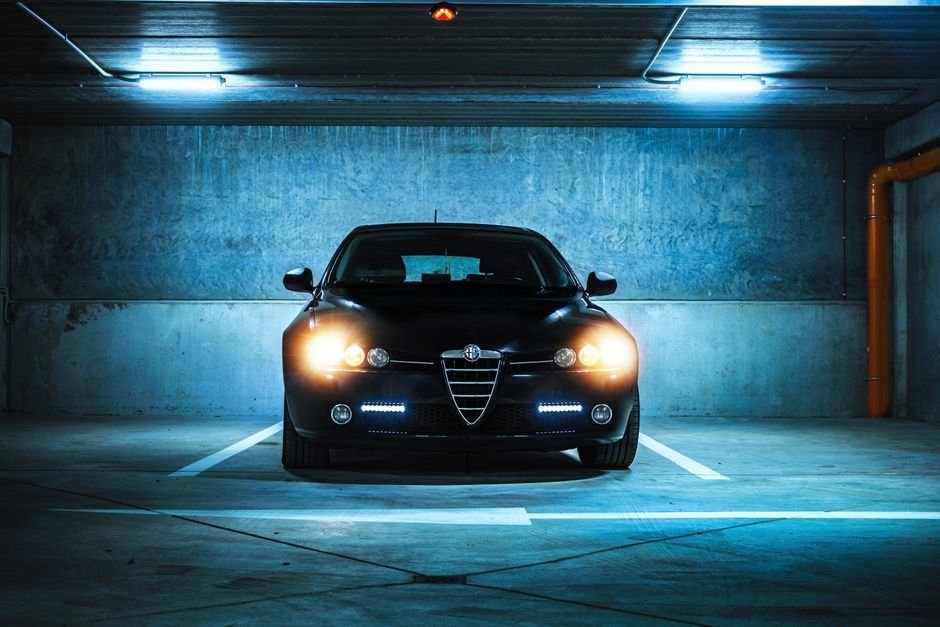
The Alfa Romeo Stelvio is one of those rare SUVs that makes you want to take the long way home. Its Italian sheet metal, razor-sharp steering, and best-in-class horsepower figures give it a personality most luxury crossovers lack. But for every shopper who falls for the Stelvio’s curves, there is another who hesitates, haunted by a single word: reliability. If you have spent any time on owner forums or talking to well-meaning friends, you have probably heard the warnings. Electrical nightmares. Infotainment gremlins. Depreciation that makes your stomach drop. The question is whether those warnings still apply to the 2026 model, or whether they are ghosts from a past the brand has largely exorcised. This article gives you the straight answer: what breaks, what does not, what it costs to own, and whether the Stelvio deserves a spot in your driveway.
Table of Contents
- The 2026 Alfa Romeo Stelvio: A Quick Overview
- Alfa Romeo Stelvio Reliability: The Reputation vs. The Reality
- Common Problems Reported by Stelvio Owners
- Alfa Romeo Stelvio vs. The Competition: Reliability Comparison
- The Cost of Owning a Stelvio: Maintenance, Depreciation, and Warranty
- Should You Buy a 2026 Alfa Romeo Stelvio? Final Verdict
- Frequently Asked Questions About the Alfa Romeo Stelvio
The 2026 Alfa Romeo Stelvio: A Quick Overview
Every 2026 Alfa Romeo Stelvio rolls off the Cassino assembly line in Italy with a 2.0-liter turbocharged four-cylinder engine making 280 horsepower and 306 lb-ft of torque. Power routes through a ZF eight-speed automatic transmission to a standard all-wheel-drive system. The result is a 0-to-60 mph sprint of 5.5 seconds, a number Alfa Romeo proudly calls best-in-class. The lineup starts at $49,995 for the base trim and climbs to $55,270 for the Veloce, which adds a limited-slip differential, sport seats, and larger wheels.
Why lead a reliability article with performance specs? Because the mechanical bones of the 2026 Stelvio are not new or experimental. The Giorgio platform underneath has been in production since 2016, shared with the Alfa Romeo Giulia sedan. The 2.0-liter engine and ZF transmission have powered hundreds of thousands of miles across two vehicle lines. Iterative improvements over nearly a decade mean the 2026 model benefits from countless software revisions, supplier updates, and assembly-line refinements. When you buy a new Stelvio today, you are not buying a first-year gamble. You are buying the most mature version of a platform Alfa Romeo has ever built.
Alfa Romeo Stelvio Reliability: The Reputation vs. The Reality
Why the Stelvio Has a “Bad Rep”
The Stelvio’s reliability reputation did not materialize out of thin air. Early production models, particularly from 2017 through 2019, earned their share of dealer visits. Owners reported infotainment screens that froze mid-drive, Bluetooth connections that dropped without warning, and backup cameras that lagged several seconds behind reality. Some cars developed parasitic battery drains that left owners stranded after a weekend of sitting in the garage. Fit-and-finish complaints, like uneven panel gaps and squeaky interior trim, did not help the perception that Italian charm came at the cost of Japanese precision.
These issues were real, but they were also amplified by Alfa Romeo’s broader reputation in the United States. The brand’s return to the American market in 2014, after a two-decade absence, came under the Fiat-Chrysler umbrella, an era not known for stellar quality control. The Stelvio launched into a market primed to doubt it. When sales peaked globally at roughly 43,000 units in 2018 and then cratered to just 3,162 U.S. sales by 2024, the narrative hardened: Alfa Romeos are unreliable, nobody buys them, and the low resale values prove it. Perception became a self-fulfilling cycle.

What Has Changed for 2026?
The 2026 Stelvio inherits a powertrain that has been debugged through years of real-world use. The 2.0-liter turbocharged engine, with its Multiair valve-actuation system, has proven durable when maintained properly. The ZF 8HP50 transmission is the same unit found in numerous BMW, Jaguar, and Ram vehicles, and it has an excellent track record for longevity. Neither component received a major redesign for 2026, which is good news for reliability: Alfa Romeo has been refining, not reinventing.
The infotainment system, once the top complaint, now runs on a Uconnect-based architecture that has received multiple software revisions. Owner forums tell a clear story. Threads about screen freezes and Bluetooth failures are dominated by 2018 and 2019 model years.
Warranty coverage also improved. Alfa Romeo now backs the Stelvio with a 4-year/50,000-mile basic warranty, a 4-year/50,000-mile powertrain warranty, and 4 years of unlimited-mile roadside assistance. Complimentary scheduled maintenance covers the first three years of ownership. That is not class-leading, but it matches BMW and Audi, and it gives new buyers a buffer against early surprises.
Common Problems Reported by Stelvio Owners
Electrical System and Infotainment: The Number One Complaint
Across every model year, electrical issues remain the most frequently cited problem in owner surveys and forum discussions. The infotainment screen is the usual suspect, with symptoms including unresponsive touch inputs, Apple CarPlay or Android Auto failing to connect, and occasional system-wide freezes that resolve only after turning the car off and on again.
Battery drain was a persistent headache for 2017 through 2019 Stelvios. The culprit was often a software bug that prevented certain modules from entering sleep mode after the car was parked. Owners would return to a dead battery after a day or two of sitting.
Engine and Transmission Reliability
The 2.0-liter turbocharged four-cylinder is a direct-injection engine, which means carbon buildup on the intake valves is a long-term concern. This is not unique to Alfa Romeo. Every direct-injection gasoline engine, from Audi to Volkswagen to Hyundai, faces the same issue. Regular Italian-style driving, meaning sustained higher RPMs that heat the valves enough to burn off deposits, helps mitigate the problem. Some owners also opt for periodic intake-valve cleaning as a preventative measure, typically around the 60,000-mile mark.
Oil leaks from the turbocharger oil feed line have been documented on a small number of higher-mileage Stelvios. The fix is straightforward, a replacement line and gasket, but the repair cost can sting if the vehicle is out of warranty. This is not a widespread failure point, but it is worth a look during a pre-purchase inspection on a used example.
The ZF eight-speed automatic transmission is the least of your worries. This gearbox is used across the industry and has proven exceptionally reliable. Harsh shifting or hesitation is almost always traced to low transmission fluid or a software adaptation issue, not mechanical failure. Many owners report the transmission feels smoother after a fluid change around 50,000 to 60,000 miles, even though ZF originally marketed the unit as “lifetime fill.”
Suspension and Steering Components
The Stelvio’s front suspension uses a double-wishbone design that contributes to its exceptional steering feel, but some owners have reported premature wear on the front control arm bushings. This is more common on vehicles driven frequently on rough, potholed roads. Symptoms include a clunking noise over bumps and slightly vague steering on-center feel. Replacing the bushings, or the entire control arm assembly, resolves the issue.
The thin-rimmed steering wheel is one of the Stelvio’s signature design elements, praised by reviewers for its easy grip and direct communication from the road. The trade-off is that the leather wrap can show wear earlier than the thicker, more heavily padded wheels in German competitors. Owners report visible smoothing and, in some cases, surface cracking on the leather after 30,000 to 40,000 miles, especially if the car is parked in direct sun frequently. A steering wheel cover or regular leather conditioning helps extend its life.
Alfa Romeo Stelvio vs. The Competition: Reliability Comparison
Alfa Romeo Stelvio vs. Lexus NX and RX
If your definition of reliability is simply “never visits the dealer except for oil changes,” Lexus wins this comparison without breaking a sweat. The Lexus NX and RX consistently top J.D. Power and Consumer Reports reliability rankings. Their resale values are among the best in the segment. The ownership experience is designed to be frictionless and predictable.
The Stelvio takes a different path. It offers 280 horsepower as standard, while the base Lexus NX 350 makes 275. The difference is not just the number but how it is delivered. The Stelvio’s throttle response is sharper, its steering is quicker, and its chassis rotates with an eagerness no Lexus SUV can match. Choosing the Stelvio over a Lexus means accepting that you will probably visit the dealer for an occasional software glitch or trim squeak. In exchange, every on-ramp and winding road becomes an event. For some buyers, that trade is worth it. For others, the peace of mind Lexus offers is non-negotiable.
Alfa Romeo Stelvio vs. BMW X3
The BMW X3 is the Stelvio’s most natural rival. Both are European, both prioritize driving dynamics, and both have reliability records that fall somewhere in the middle of the luxury pack. The base X3 xDrive30i makes 248 horsepower, well short of the Stelvio’s 280. To match the Alfa’s output, you need the X3 M40i, which starts considerably higher on the price ladder.
On the reliability front, the two are closer than brand perception suggests. BMW has its own history of electrical complexity and expensive out-of-warranty repairs. The B48 engine in the X3 is well-regarded, as is the ZF transmission, the same unit used in the Stelvio. Where BMW holds an advantage is in its dealer network. There are simply more BMW service centers in the United States, and independent shops familiar with the brand are easier to find. If you live far from an Alfa Romeo dealer, the BMW becomes the more practical choice by default.
Alfa Romeo Stelvio vs. Porsche Macan
The Porsche Macan is the benchmark for driving dynamics in the compact luxury SUV segment. It is also significantly more expensive to buy and maintain. The base Macan starts above the Stelvio Veloce, and Porsche’s option pricing can inflate the sticker quickly. Maintenance costs at Porsche dealers are among the highest in the industry.
The Stelvio delivers roughly 90 percent of the Macan’s handling magic at a lower entry price and with a simpler powertrain. The base Macan uses a turbocharged four-cylinder similar in concept to the Stelvio’s engine, but Porsche’s version has its own set of known issues, including timing chain cover oil leaks. Neither vehicle is a Toyota when it comes to long-term ownership costs, but the Stelvio’s included maintenance and lower purchase price make it the value play for driving enthusiasts.
The Cost of Owning a Stelvio: Maintenance, Depreciation, and Warranty
Maintenance Costs
Alfa Romeo includes complimentary scheduled maintenance for the first three years of ownership on the 2026 Stelvio. That covers oil changes, filter replacements, and inspections according to the manufacturer’s schedule. During this period, your out-of-pocket maintenance costs should be zero, barring tires or damage.
After the complimentary period ends, expect maintenance costs to land in the same ballpark as BMW or Audi. An oil change at an Alfa Romeo dealer typically runs between $150 and $200. Brake jobs are more expensive than mainstream brands, with pads and rotors often exceeding $1,000 per axle at dealer rates. Independent European specialty shops can reduce these costs, but the Stelvio is not particularly DIY-friendly. Parts are expensive, and some procedures require diagnostic software that only dealers and well-equipped independents possess.
Depreciation: Why Is the Stelvio “So Cheap” Used?
Search for a used Alfa Romeo Stelvio, and you will find prices that seem too good to be true. CARFAX data shows an average used price of roughly $27,061. That is a steep drop from a $49,995 starting MSRP. The question “Why is the Alfa Romeo Stelvio so cheap?” appears frequently in search results, and the answer is more about perception than mechanical failure.
Three factors drive Stelvio depreciation. First, the brand’s reliability reputation suppresses demand on the used market, pushing prices down. Second, a high volume of off-lease Stelvios has flooded the market at predictable intervals, increasing supply. Third, the sales decline from 2018 to 2024 created a narrative of a struggling model, even though the vehicle itself improved over that same period.
For used-car buyers, this is an opportunity. A three-year-old Stelvio with low miles offers 280 horsepower, standard all-wheel drive, and Italian styling for roughly the price of a new Honda CR-V Touring. If you budget for slightly higher maintenance costs and accept that resale value will never match a Lexus, the value proposition is compelling.
Warranty Coverage for 2026
The 2026 Alfa Romeo Stelvio comes with a 4-year/50,000-mile basic warranty that covers bumper-to-bumper defects. The powertrain warranty matches at 4 years/50,000 miles, which is notable because some competitors, like Genesis and Acura, offer longer powertrain coverage. Roadside assistance runs for 4 years with unlimited mileage, a useful perk given the relatively thin Alfa Romeo dealer network. Corrosion coverage extends to 5 years with unlimited mileage. This warranty package is competitive with European rivals but falls short of the longer coverage offered by Lexus and Acura.
Should You Buy a 2026 Alfa Romeo Stelvio? Final Verdict
The 2026 Alfa Romeo Stelvio is for the buyer who walks into a dealership knowing exactly what they value. If you prioritize handling feel, steering feedback, and the emotional response a car provokes every time you see it in the garage, the Stelvio delivers in ways a Lexus NX or Acura RDX cannot touch.
Skip the Stelvio if maximum reliability, minimal dealer visits, and strong resale value are your top priorities. Lexus and Acura exist for exactly that reason, and there is no shame in choosing predictability over passion. The Stelvio is not a set-it-and-forget-it appliance, and it probably never will be.
The bottom line is this: the horror stories that haunt the Stelvio’s reputation are rooted in the 2017 through 2019 model years. The 2026 model benefits from nearly a decade of continuous improvement to its engine, transmission, electronics, and assembly process. It is a reliable enough luxury SUV, not flawless, but far from the ticking time bomb its reputation suggests. If you buy new or CPO, the risk is manageable, and the reward is one of the best-driving crossovers available for under $55,000.
Frequently Asked Questions About the Alfa Romeo Stelvio
Is the Alfa Romeo Stelvio reliable in 2026?
Yes, the 2026 Stelvio is significantly more reliable than early models. The powertrain is mature and proven, and most electrical issues from the 2017 through 2019 model years have been resolved through software updates and component revisions. Focus on post-2020 models if buying used.
Why is the Alfa Romeo Stelvio so cheap on the used market?
Rapid depreciation is driven by the brand’s lingering reliability reputation and a high supply of off-lease vehicles, not by widespread mechanical failures. Low demand pushes prices down, creating strong value for used-car buyers willing to accept slightly higher maintenance costs.
Is the Stelvio expensive to maintain?
Maintenance costs are moderate. Alfa Romeo covers scheduled maintenance for the first three years. After that, expect costs similar to BMW or Audi, higher than Lexus or Acura but not dramatically so. Dealer labor rates and parts prices are the main drivers.
How long do Alfa Romeo Stelvios last?
With proper maintenance, many owners report crossing 100,000 miles without major issues. The engine and ZF transmission are robust. Carbon buildup on intake valves is a long-term concern common to all direct-injection engines, but regular spirited driving and occasional cleaning can manage it.
Is the Stelvio better than a Lexus NX?
It depends on what you value. The Stelvio is better for driving engagement, horsepower, and emotional appeal. The Lexus NX is better for predicted reliability, resale value, and a frictionless ownership experience. There is no wrong answer, only different priorities.
Read more @ Motoreview.net