
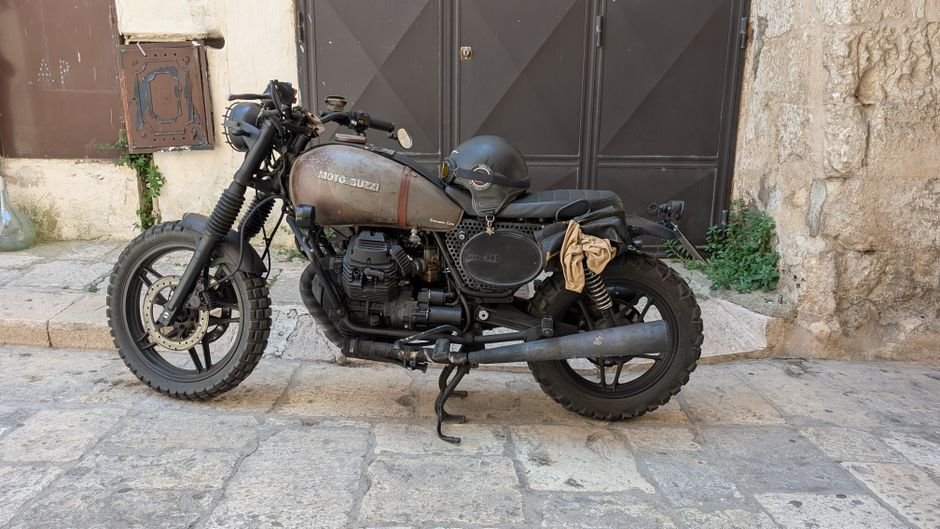
If you are researching the Moto Guzzi V7 for 2026, you already know it is not just a motorcycle. It is a statement. The transverse V-twin and the iconic Mandello del Lario heritage contribute to its uniqueness. The sound that only a 90-degree Italian twin can make is captivating. But does the updated 853cc engine and a new suite of electronics deliver enough substance to justify the price tag? This review cuts through the romance to give you a balanced, no-fluff evaluation of the entire 2026 V7 lineup.
Table of Contents
- The 2026 Moto Guzzi V7 Lineup: Stone vs. Special vs. Sport
- Pros of Owning a 2026 Moto Guzzi V7
- Cons of Owning a 2026 Moto Guzzi V7
- Moto Guzzi V7 vs. The Competition (2026)
- Ownership Costs and Practical Considerations
- The Verdict: Is the 2026 Moto Guzzi V7 a Good Buy?
- Frequently Asked Questions
The 2026 Moto Guzzi V7 Lineup: Stone vs. Special vs. Sport
Moto Guzzi has streamlined the V7 range into three distinct trims for 2026, each targeting a different rider while sharing the same beating heart. Understanding the differences is critical before you walk into a dealership.

The V7 Stone is the entry point. It is the stripped-down, matte-finished urban runabout with cast alloy wheels and a single analog-style instrument pod. It is the most affordable way into the V7 family, and it wears its minimalism well.
At the top sits the V7 Sport, priced at $10,690 MSRP. This is the performance-focused variant and the one receiving the most attention for 2026. It gets a 41mm inverted fork, dual 320mm front discs with four-piston Brembo calipers, a six-axis IMU enabling cornering ABS and traction control, and three riding modes.
Pros of Owning a 2026 Moto Guzzi V7
Unmatched Character and Heritage
The Moto Guzzi V7 is not a motorcycle you buy because of a spec sheet. You buy it because of how it makes you feel. The transverse V-twin is a visual and mechanical signature unlike anything else on the road.
The engine itself has a backstory that Japanese manufacturers cannot fabricate. It was originally designed for a sports version of the Fiat 500, then adapted for a military 3×3 vehicle.

Improved Performance and Electronics (Sport Model)
The 2026 update is more significant than the modest horsepower bump from 65 to 67.3 suggests. The real story is the electronics package on the V7 Sport. The addition of a six-axis IMU is a legitimate leap forward for a retro-styled machine.
The V7 Sport’s chassis upgrades are equally meaningful. The 41mm inverted fork and dual 320mm Brembo discs deliver stopping power and front-end feel that previous generations lacked. The three riding modes (RAIN, ROAD, SPORT) genuinely alter throttle response.
Low Seat Height and Approachable Ergonomics
The V7 is one of the most accessible middleweight retro bikes on the market. The seat height sits at approximately 30.9 inches, which allows most riders to plant both feet firmly at a stop.
Cons of Owning a 2026 Moto Guzzi V7
The “Italian Quirks”: Reliability and Maintenance
Let us address the question that potential buyers search for but few reviews answer directly: what are common Moto Guzzi problems? The V7 is not unreliable in the sense of leaving you stranded, but it is not a Honda.
Maintenance costs are higher than the Japanese competition. The transverse engine layout, while beautiful, makes certain procedures more labor-intensive.
Handling Limitations: The Front-End Patter
A specific handling characteristic emerged during the Cycle News first-ride review of the V7 Sport, and it demands attention. When pushed through long, sweeping corners at speed, the front end exhibits a pattern.
For the rider who sticks to casual cruising and city streets, this is a non-issue. You will likely never encounter it. But if you are an aggressive canyon carver who expects a “Sport” badge to mean cornering precision, this is a legitimate limitation.
Not a Speed Machine
The 67 horsepower figure tells the story before you even throw a leg over. The V7 is adequate, not thrilling, in a straight line. The engine runs out of steam above 7,000 rpm. It is built for grunt, not top-end rush.
The weight is also noticeable. At approximately 490 pounds wet, the V7 carries its mass low, but you feel it when paddling out of a parking space or executing a tight U-turn. It is not unmanageable, but it is heavier than the 410-pound Kawasaki Z650RS.
Moto Guzzi V7 vs. The Competition (2026)
The middleweight retro segment is crowded in 2026, and the V7 faces stiff competition from every direction.
The Kawasaki Z650RS, priced around $8,500, is the rational choice. It is lighter, smoother, and significantly cheaper. Its parallel twin is bulletproof and requires minimal maintenance. The V7 wins on character, sound, and exclusivity, but the Kawasaki wins the spreadsheet war.
The Yamaha XSR700, estimated at $8,999, features the celebrated CP2 engine. That 689cc parallel twin is more powerful in practice and far more entertaining to rev out. The XSR700 is the hooligan’s retro bike. The V7 counters with superior low-end torque and a more premium, metal-and-leather feel, especially in the Sport trim. The Yamaha feels built to a price; the Guzzi feels built to a standard.
The Triumph Bonneville T100, at roughly $11,000, is the direct rival. The Bonneville is more refined, with a smoother engine and a vastly superior US dealer network. If you value peace of mind and easy access to service, the Triumph is the safer bet. The V7 is more unique, with a racing heritage that the modern Bonneville cannot quite match. Choosing between them is a heart-versus-head decision.
The Royal Enfield Interceptor 650, at just $6,200, is the value king. It delivers 47 horsepower and genuine retro charm for thousands less. The V7 is in a different league regarding build quality, power, and electronics.
Ownership Costs and Practical Considerations
Before you sign the paperwork, understand what you are getting into financially. Insurance premiums for the Moto Guzzi V7 tend to run higher than for a comparable Japanese 650cc twin. The “Italian exotic” label, combined with higher parts costs, influences insurer calculations. Get a quote before you buy so there are no surprises.
Real-world fuel economy lands between 45 and 50 miles per gallon. With the 5.5-gallon tank, that translates to a range of roughly 200 to 240 miles under mixed riding conditions.
The aftermarket for the V7 is robust. Brands like Mistral and Agostini offer exhaust systems that transform the sound from a pleasant rumble into a spine-tingling bark. Seats, fly screens, luggage racks, and suspension upgrades are all readily available.
Resale value is a mixed picture. Moto Guzzis depreciate faster than Triumphs or Japanese bikes in the first three years. A used V7 can be a genuine bargain.
The Verdict: Is the 2026 Moto Guzzi V7 a Good Buy?
So, are Moto Guzzi V7s any good? Yes, emphatically, if you value character, style, and a unique riding experience over outright performance or low maintenance costs.
So, are Moto Guzzi V7s any good? Yes, emphatically, if you value character, style, and a unique riding experience over outright performance or low maintenance costs.
Frequently Asked Questions
Q: How fast is the 2026 Moto Guzzi V7?
A: Expect 0 to 60 mph in approximately 4.5 seconds and a top speed around 130 mph. It is quick enough to be entertaining, but it is not a fast motorcycle by modern standards.
Q: What are common Moto Guzzi V7 problems?
A: Minor electrical quirks, such as sensor glitches and battery drain if left unused, are the most reported issues. The V7 Sport can also exhibit front-end patter in long corners due to non-adjustable rebound damping.
Q: Is the Moto Guzzi V7 good for beginners?
A: Yes, thanks to the low seat height and manageable power delivery. However, the weight and higher cost make it a better choice as a second bike after gaining some experience.
Q: Does the 2026 V7 have cruise control?
A: Yes, the V7 Sport model includes cruise control. It is activated via the mode switch on the right handlebar, which is an unusual but functional setup.


Trackbacks/Pingbacks