2026 Porsche Cayenne Electric Review: Performance, Range, Charging, and Value
Porsche’s 2026 Cayenne Electric and Cayenne Coupe Electric are designed to answer a difficult question: can a large, premium electric SUV deliver genuine Porsche performance without giving up the comfort, practicality, and long-distance ability luxury buyers expect?
The short answer is yes—but the details matter. The new Cayenne Electric is not simply a battery-powered version of the existing SUV. It is a larger, newly engineered electric model with dual-motor all-wheel drive, an 800-volt electrical architecture, adaptive air suspension, a sophisticated digital cockpit, and enough towing capacity to remain useful beyond the daily commute. The Coupe Electric adds a sleeker roofline and a more style-focused character, but it sacrifices cargo room and costs more.
For luxury-EV shoppers, the most important story is not the headline power figure—although the Turbo’s 1,139 horsepower is difficult to ignore. It is the way Porsche combines very high performance with polished ride quality, strong charging capability, and the precise steering and brake-pedal feel expected from the brand.
2026 Porsche Cayenne Electric: Quick Facts
- Body styles: Cayenne Electric SUV and Cayenne Coupe Electric
- Starting price: $109,000 for the Cayenne Electric; $113,800 for the Cayenne Coupe Electric
- Trim levels: Cayenne Electric, Cayenne S Electric, and Cayenne Turbo Electric; equivalent Coupe Electric versions are also available
- Drivetrain: Dual-motor all-wheel drive
- Base-model overboost output: 435 horsepower
- Cayenne S Electric overboost output: 657 horsepower
- Cayenne Turbo Electric overboost output: 1,139 horsepower
- 0–60 mph with Launch Control: 4.5 seconds for the base model, 3.6 seconds for the S, and 2.4 seconds for the Turbo
- Battery: Approximately 108 kWh usable capacity, depending on specification and reporting method
- DC fast charging: Up to 390–400 kW, depending on body style and charging equipment
- Claimed 10–80 percent DC charging time: About 16 minutes under optimal conditions
- Maximum towing capacity: Up to 7,716 pounds (3.5 t) with the appropriate equipment
- Seating: Five passengers
Pricing excludes options, taxes, registration, destination charges, dealer charges, and other fees. Porsche’s extensive options list can raise the final price substantially.
A New Electric Cayenne, Not a Conversion. 2026 Porsche Cayenne Electric review
The Cayenne Electric uses a dedicated electric-vehicle layout rather than simply replacing an internal-combustion engine with batteries inside the existing gas-powered Cayenne. Its battery is integrated into the body structure, helping increase rigidity, while the electric motors provide all-wheel drive through one motor on each axle.
The front motor can be disengaged under partial load to reduce energy consumption. The rear motor is more powerful and contributes to the Cayenne’s rear-biased driving character. That approach is important because Porsche is trying to preserve the sense of connection that distinguishes its vehicles from heavier, less communicative luxury EVs.
The electric Cayenne is also larger than the gas model in some key dimensions. That creates more space for passengers and helps give the SUV a substantial road presence, but it also means buyers should not expect a lightweight sports-car experience. Even with clever battery packaging and powerful motors, this is a large luxury vehicle.
Exterior Design: Familiar Porsche, More Aerodynamic Detail
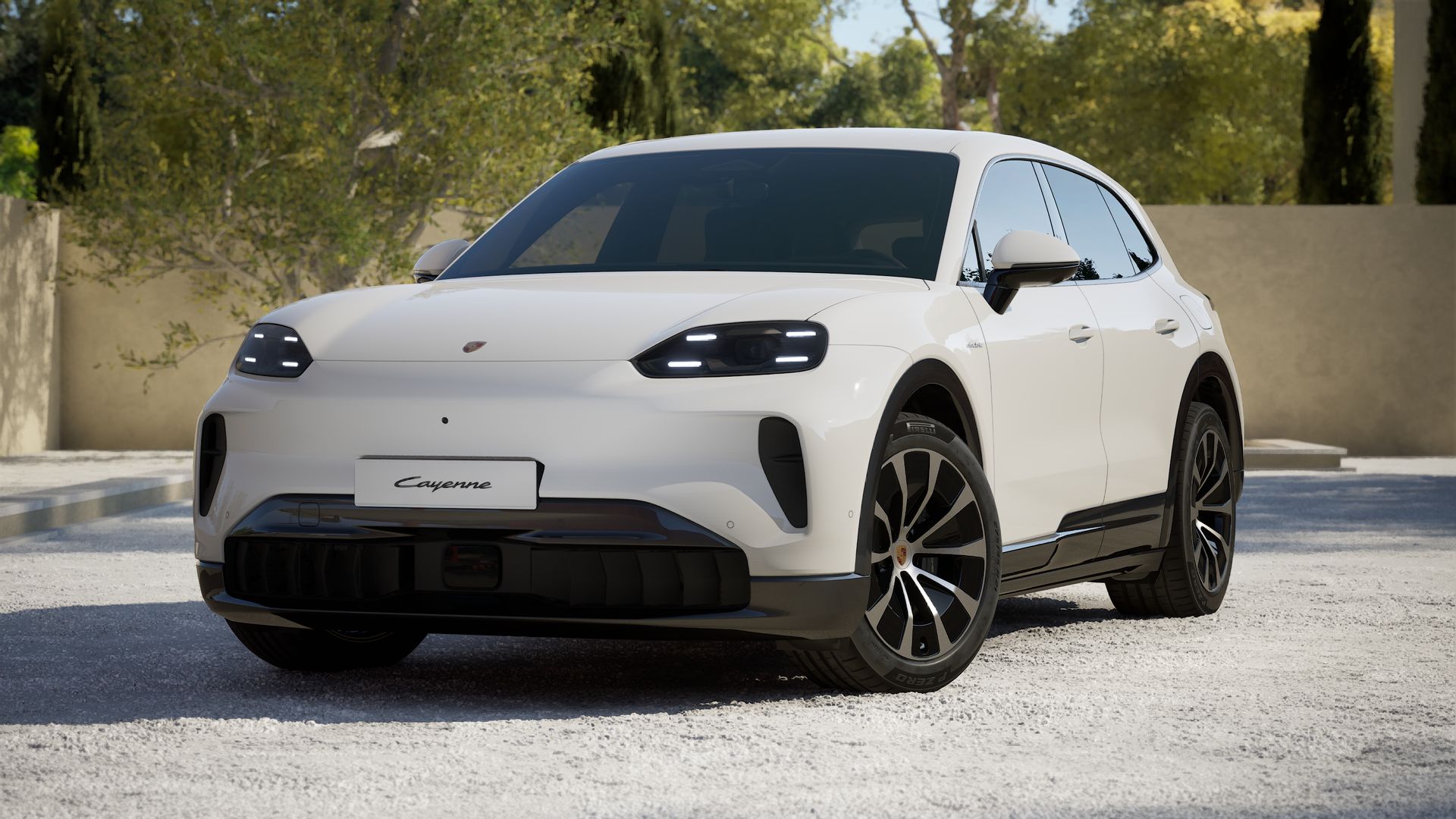
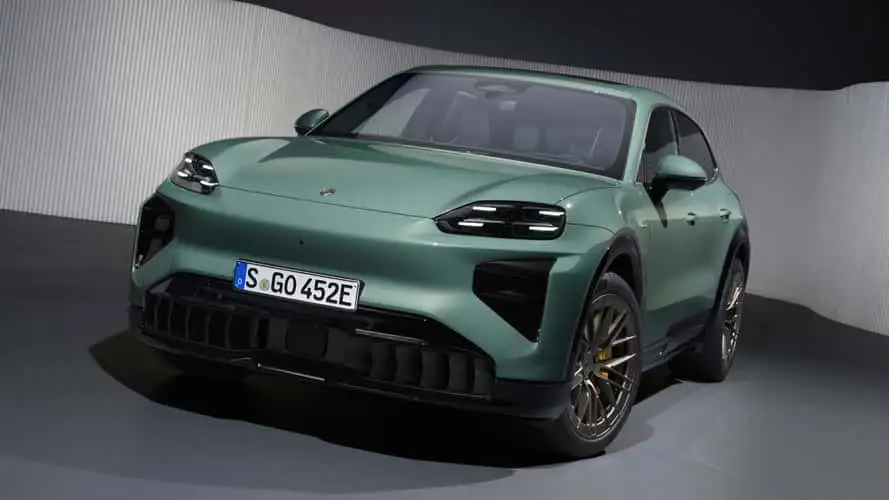
The 2026 Cayenne Electric retains the recognizable proportions of a Porsche SUV: a low hood, broad shoulders, strong rear haunches, and a cabin pushed toward the rear of the vehicle. The design is familiar enough to identify as a Cayenne, but details such as the closed front treatment, active aerodynamic elements, flush door handles, and carefully shaped underbody signal its electric powertrain.
The Cayenne Coupe Electric has a lower, faster roofline that gives it a more dramatic profile. It is the more visually expressive choice, particularly with larger wheels and Porsche’s performance-oriented exterior options. The trade-off is practical rather than cosmetic: the Coupe Electric has a smaller luggage area and less maximum cargo capacity than the standard SUV.
Neither version looks like an anonymous electric crossover. Porsche has resisted the trend toward overly minimal styling and has kept enough visual tension in the bodywork to make the Cayenne feel like a performance product.
Performance: The Base Model Is Already Fast. 2026 Porsche Cayenne Electric review
The base Cayenne Electric uses two electric motors and standard all-wheel drive. Porsche lists up to 435 horsepower with overboost and Launch Control, with a claimed 0–60 mph time of 4.5 seconds. That is quick enough for nearly every real-world driving situation, even if the S and Turbo versions are dramatically faster.
The Cayenne S Electric raises output to 657 horsepower and cuts the claimed 0–60 mph time to 3.6 seconds. This is the likely choice for buyers who want serious performance without paying for the extreme Turbo model. It should provide effortless acceleration for highway merging and passing while maintaining a more usable relationship between performance and price.
The Cayenne Turbo Electric sits at the top of the range with up to 1,139 horsepower in overboost. Porsche claims a 2.4-second 0–60 mph time and a top track speed of 162 mph (ca. 261 km/h) with suitable tires. Those numbers place the Turbo among the quickest SUVs ever produced, regardless of powertrain.
But acceleration is only one part of the experience. Porsche’s goal is to make the Cayenne Electric controlled and natural at speed, not merely explosive in a straight line. Adaptive air suspension and Porsche Active Suspension Management are standard across the lineup, according to Porsche’s model information. Optional rear-axle steering can make the large SUV more agile in tight corners and easier to maneuver in parking areas.
The Turbo can also be equipped with Porsche Active Ride, a more advanced suspension system intended to reduce pitch, dive, and body roll. For buyers who regularly drive on twisting roads, this option may do more to distinguish the Turbo than its already excessive horsepower figure.
Ride and Handling: Comfort Without Losing the Porsche Connection
Luxury-EV buyers often have to choose between a soft, quiet ride and genuinely engaging handling. The Cayenne Electric aims to minimize that compromise.
In Comfort and Normal modes, the SUV is designed to absorb poor pavement and settle quickly after bumps. The standard adaptive air suspension gives Porsche room to tune the vehicle for both relaxed cruising and spirited driving. Sport and Sport Plus modes sharpen the responses, increase the sense of urgency, and make the Cayenne feel more deliberate on a winding road.
The steering is especially important. Many heavy electric SUVs feel isolated because their steering is accurate but lifeless. The Cayenne Electric is engineered to give the driver a clearer sense of what the front tires are doing. It will never feel small or lightweight, but it should feel more manageable and more rewarding than its dimensions suggest.
Regenerative braking is also a major part of the driving experience. Porsche says the system can recover substantial energy under deceleration, allowing the electric motors to handle much of the routine braking. The best systems make the transition between regeneration and friction braking difficult to detect, and the Cayenne Electric is intended to maintain a consistent pedal feel rather than deliver the artificial sensation found in some EVs.
Range and Efficiency: A Strong Technical Foundation
Porsche’s U.S. materials do not present one single range figure that applies to every Cayenne Electric configuration. Final range will vary with trim, wheel and tire choice, equipment, weather, driving style, and the difference between the SUV and Coupe body styles. Independent early estimates have placed the lineup in roughly the 330-to-340-mile range, but buyers should verify the official EPA rating for the exact configuration they plan to purchase.
That caveat is important because large wheels, performance tires, cold weather, high-speed driving, and frequent use of climate control can reduce real-world range. The Turbo Electric, in particular, is built for performance and may not achieve the same efficiency as the base model.
The Cayenne Electric’s battery has approximately 108 kWh of usable capacity in independent specifications. That is a substantial pack, but the vehicle’s size and performance mean owners should still plan longer trips around charging stops rather than treating the range estimate as a guarantee.
For daily use, the most important question is whether the owner can charge at home. A home wallbox can make the Cayenne Electric convenient to live with, while public charging becomes most relevant on road trips. Porsche also offers an optional inductive wireless charging system, expected to become available from the second half of 2026 at the earliest. It allows the vehicle to begin charging automatically when parked over a compatible floor pad, with charging power of up to 11 kW.
Charging: One of the Cayenne Electric’s Biggest Advantages
The Cayenne Electric uses an 800-volt architecture and supports DC fast charging at up to approximately 390 kW, with Porsche’s U.S. material also describing up to 400 kW for the SUV. Under the right conditions—a sufficiently powerful charger, proper battery temperature, battery preconditioning, and an appropriate state of charge—Porsche claims a 10–80 percent charge in about 16 minutes.
That is a strong result for a large luxury SUV. It can make a short road-trip stop meaningfully more useful, especially when the charging station can sustain the vehicle’s required voltage and current. Not every public charger will deliver the advertised peak, so owners should distinguish between the vehicle’s capability and the output of the station they happen to find.
The Porsche Charging Planner can calculate charging stops and precondition the battery before arrival. This matters more than a peak charging number because fast charging depends heavily on battery temperature and the vehicle’s preparation for the stop.
The Coupe Electric uses the same basic fast-charging concept, though Porsche lists slightly different maximum charging figures depending on the body style and equipment. In practical terms, both versions are intended to be capable long-distance EVs rather than vehicles designed only for local driving.
Interior: High-Tech Without Becoming a Screen Experiment
The Cayenne Electric introduces a new digital interior while retaining the driver-focused layout associated with Porsche. A curved 12.3-inch central OLED touchscreen handles infotainment and vehicle functions, while a 14.3-inch instrument display sits ahead of the driver. An optional 14.9-inch passenger display gives the front passenger access to entertainment and other information without distracting the driver.
The dashboard is more contemporary than the gas-powered Cayenne’s, but Porsche has not covered every surface with a screen. Physical controls remain for important functions, and the center display includes a wrist-rest area intended to make touchscreen operation more stable while moving.
Porsche’s new Digital Interaction interface supports customizable widgets and a more modern presentation. Available features include Porsche Connect services, voice control, digital-key functionality, and entertainment applications. Buyers can also specify an augmented-reality head-up display that places navigation information in the driver’s field of view.
The interior’s main weakness is storage. Early driving impressions have noted that the large center console takes up considerable space while offering fewer useful storage compartments than expected. That is a small issue in an expensive vehicle, but it is worth checking during a test drive, particularly for owners who carry phones, sunglasses, charging cables, and travel items every day.
Space and Practicality: Choose the Body Style Carefully
The standard Cayenne Electric is the more practical of the two. Porsche lists approximately 27.6 cubic feet (0.78 m³) of luggage capacity behind the rear seats and up to 56.1 cubic feet (1.59 m³) with the rear seats folded. The rear seats are electrically adjustable and foldable, allowing owners to prioritize passenger comfort or cargo room.
The Coupe Electric provides approximately 18.9 cubic feet (0.54 m³) behind the rear seats and up to 47.6 cubic feet (1.35 m³) with them folded. Those figures are still usable, but the difference is significant for families, travelers, or anyone who regularly carries larger items.
The coupe’s sloping roof does not eliminate rear-seat usability, but it reduces the amount of vertical space available for bulky cargo. If the coupe is chosen primarily for appearance, buyers should make sure they are comfortable paying more for less utility.
Both versions can tow up to 7,716 pounds (3.5 t) with the correct equipment, which is an impressive figure for an EV. Towing can have a substantial effect on energy consumption and range, so the capability should be viewed as useful flexibility rather than evidence that the vehicle can tow long distances without additional planning.
Off-Road Capability: More Than a Marketing Detail
The Cayenne Electric is not a dedicated off-road vehicle, but Porsche has given it genuine all-terrain capability. Selectable ride heights and off-road driving programs allow the driver to adjust the vehicle for rougher surfaces. Porsche lists a wading depth of approximately 19 inches (ca. 48 cm), and an optional Offroad Package can increase the approach angle with a different front fascia.
Most owners will spend almost all of their time on pavement. Even so, the ability to handle gravel roads, steep driveways, snow, muddy access roads, and light trail use adds to the Cayenne’s usefulness. It also gives the vehicle a broader identity than a low-slung performance crossover.
Cayenne Electric vs. Cayenne Coupe Electric
The choice between the two body styles is straightforward:
| Category | Cayenne Electric | Cayenne Coupe Electric |
|---|---|---|
| Starting price | $109,000 | $113,800 |
| Base 0–60 mph | 4.5 seconds | 4.5 seconds |
| Base overboost output | 435 hp | 435 hp |
| Rear-seat practicality | Better | More style-focused |
| Cargo capacity | About 27.6–56.1 cu. ft. | About 18.9–47.6 cu. ft. |
| Best for | Luxury, utility, and touring | Design, image, and a sportier profile |
The standard SUV is the stronger recommendation for most buyers. It costs less, carries more luggage, and maintains the same impressive performance hardware. The Coupe Electric makes sense when its appearance is a priority and the owner does not need maximum cargo space.
The pricing gap grows as the trim level rises. Porsche lists the Cayenne S Coupe Electric at $131,200 versus $126,300 for the S Electric, while the Turbo Coupe Electric starts at $168,000 versus $163,000 for the Turbo Electric. Those differences are before options.
Which 2026 Cayenne Electric Should You Buy?
The base Cayenne Electric is already fast, technologically advanced, and capable of long-distance travel. It is the rational choice for buyers who want Porsche design and handling without paying for extreme acceleration.
The Cayenne S Electric is the performance sweet spot. Its 657 horsepower offers a meaningful improvement over the base model, but it remains less excessive than the Turbo. Buyers who enjoy fast road driving and want a stronger margin of performance should start here.
The Cayenne Turbo Electric is for buyers who want the ultimate version and are comfortable with a six-figure price that can climb rapidly with options. Its 1,139-horsepower output and 2.4-second claimed 0–60 mph time are extraordinary, but most owners will not need that level of performance. The Turbo is an emotional purchase rather than a value-driven one.
For body style, choose the standard SUV unless the coupe’s design is worth the extra cost and reduced practicality. The Coupe is attractive, but it does not provide a performance advantage over the equivalent SUV.
Main Advantages
- Genuine Porsche steering, braking, and chassis tuning
- Quick acceleration across the lineup
- Exceptional performance from the Cayenne Turbo Electric
- Strong 800-volt charging architecture
- Claimed 10–80 percent DC charging in about 16 minutes under ideal conditions
- Comfortable adaptive air suspension included throughout the range
- High towing capacity for an electric luxury SUV
- More practical standard SUV body style
- Distinctive, premium interior and digital cockpit
Main Drawbacks
- High starting prices before options
- Porsche options can make the final cost much higher
- The coupe electric sacrifices meaningful cargo space
- Real-world range will vary widely with wheels, weather, speed, and driving style
- Peak charging figures require compatible high-output infrastructure
- Interior storage is not as generous as expected
- Turbo performance is impressive but difficult to justify rationally
Final Verdict
The 2026 Porsche Cayenne Electric is one of the most ambitious electric SUVs yet. It does not treat electrification as a reason to abandon the traits that made the Cayenne successful. Instead, it uses electric power to improve acceleration, packaging, traction, charging speed, and everyday refinement while preserving Porsche’s focus on steering, braking, and chassis control.
The base model is the best all-rounder, the S Electric is the strongest performance-value choice, and the Turbo Electric is a technological statement with supercar-level acceleration. The standard SUV is the recommended body style for buyers who value utility, while the Coupe Electric is aimed at those who prioritize design and exclusivity.
The Cayenne Electric is not an inexpensive way to enter the EV market, and the options list demands discipline. It also cannot escape the basic realities of a heavy, powerful luxury SUV: fast driving and large wheels will reduce efficiency, and long-distance trips still require thoughtful charging planning. But for buyers who want a premium electric SUV that feels engineered rather than merely equipped, the Cayenne Electric is a compelling choice.
Our verdict: The 2026 Porsche Cayenne Electric sets a high benchmark for electric luxury SUVs by combining rapid performance, long-distance charging capability, useful towing capacity, and genuinely engaging road manners. Choose the standard SUV for the best balance; choose the Coupe Electric for style; choose the Turbo only if extraordinary performance is the point.
Editorial Fact-Checking Note
This article uses Porsche’s current U.S. model information and independent automotive coverage available for the 2026 model year. Pricing, trim availability, EPA range ratings, charging performance, equipment, and option costs can change by market and configuration. Verify the final specifications with Porsche before publication or purchase.
More EV reviews @ motoreview.net